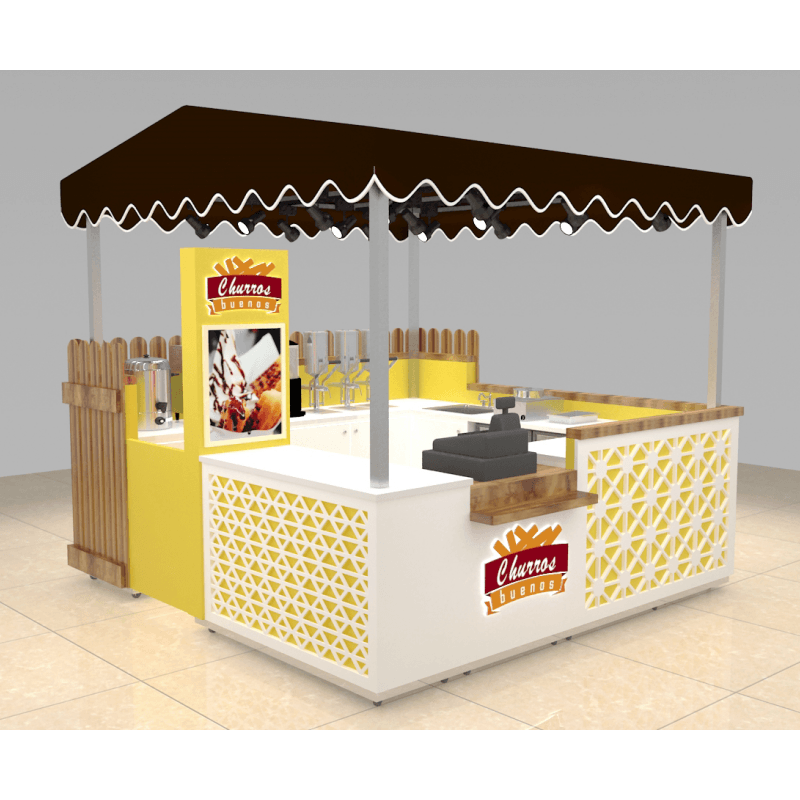
If you are opening a bubble tea shop, candy store, ice cream shop, food business, perfume store, or jewelry shop, the kiosk or counter is often one of the first things customers notice.
And when you start getting quotes, you may quickly find that the prices are very different.
One custom retail kiosk might cost a few thousand dollars. Another can cost much more. The difference is not always about size. Materials, storage, countertop design, lighting, finishes, and the amount of customization can all change the final price.
So, how much should you actually budget for a custom retail kiosk in the U.S. in 2026?
A Typical Starting Point
For a small-to-medium indoor retail kiosk or counter, a reasonable starting budget is often around $2,000–$6,000 per unit.
A simple counter with a basic structure and finish may be below this range. A larger, more detailed kiosk with custom branding, display areas, lighting, refrigeration, special materials, or complicated shapes can easily go above it.
For example, a simple reception counter is very different from a fully customized ice cream kiosk with storage, product display, equipment openings, lighting, and branded panels.
There is no useful “one-size-fits-all” kiosk price. The design tells you much more than the word kiosk does.
1. Size Is the First Cost Factor
A 6-foot candy counter and a 12-foot retail kiosk are obviously going to have different production costs.
But size affects more than the amount of material used.
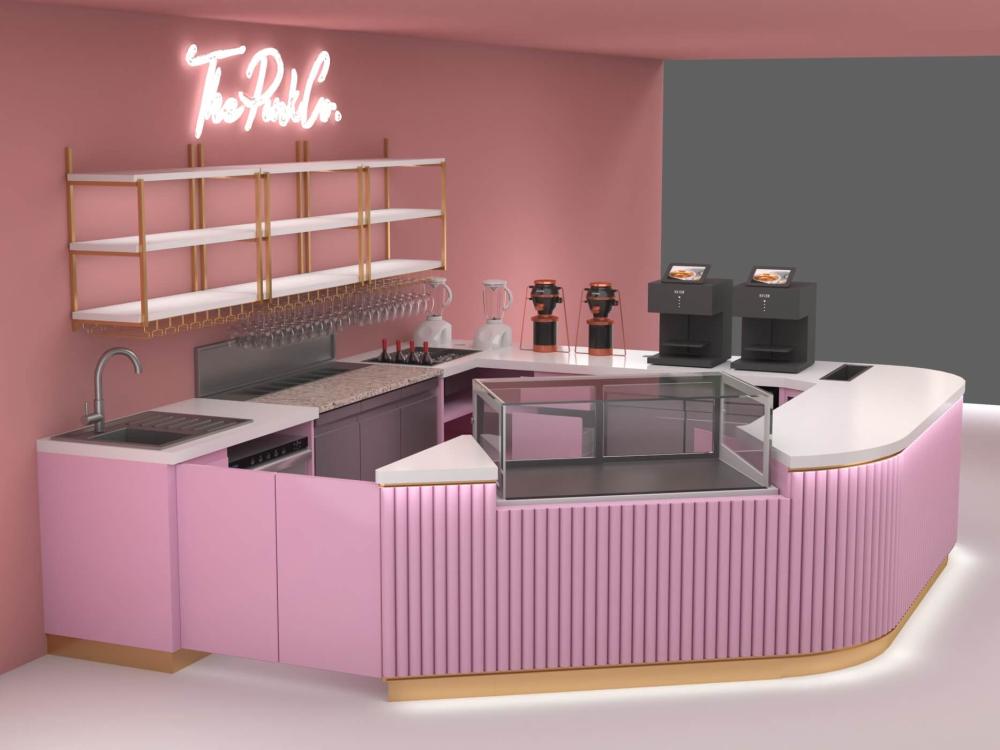
A larger kiosk may require more internal framing, additional cabinets, more countertop material, more finishing work, and stronger packaging for shipping.
If you are opening a small shop, don't automatically assume that a bigger kiosk will make the store look better. A well-designed compact counter can often give you more usable space while keeping the budget under control.
2. The Material You Choose Matters
The exterior finish can make a noticeable difference in the quotation.
Common materials for commercial retail kiosks and counters include powder-coated steel, stainless steel, aluminum, acrylic, glass, laminate, wood-based panels, and solid-surface materials.
A straightforward powder-coated finish is usually easier to manufacture than a kiosk covered with premium materials or complicated decorative surfaces.
For a perfume or jewelry store, you may want a more premium appearance. For a candy or snack shop, colorful acrylic panels, illuminated branding, or a playful shape may be more important.
The best material is not necessarily the most expensive one. It should match the product, store environment, and expected daily use.
3. Storage Can Change the Price
This is something store owners sometimes overlook.
A kiosk is not only a place to display products. It often needs to hide everything you don't want customers to see.
Packaging, bags, cleaning supplies, inventory, POS equipment, utensils, and other daily-use items all need somewhere to go.
Adding drawers, cabinets, shelves, sliding doors, or adjustable storage increases the amount of fabrication required.
Before requesting a quote, think about what you need to store inside the kiosk. It is much easier to design the storage into the counter from the beginning than to discover later that there is nowhere to put your supplies.
4. Your Business Type Changes the Design
A bubble tea kiosk, ice cream kiosk, candy kiosk, and jewelry counter may all be called “retail kiosks”, but they are not built the same way.
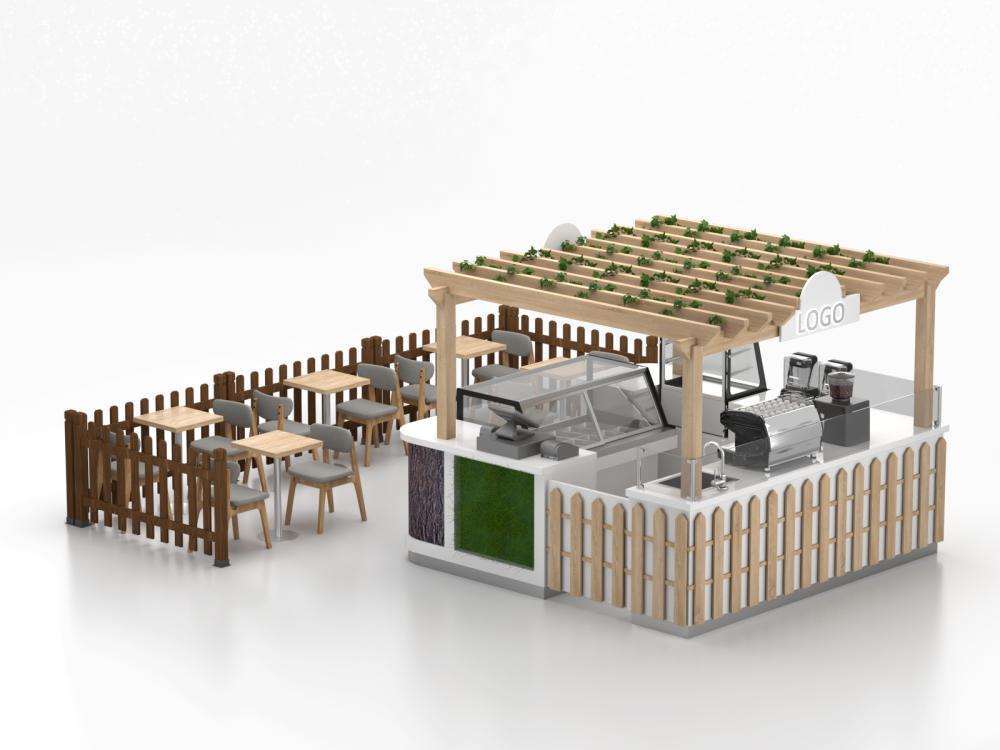
A beverage kiosk may need openings for plumbing, electrical equipment, sinks, refrigerators, or preparation areas.
An ice cream kiosk may need space for freezers, topping containers, scoops, and customer-facing displays.
A candy store may focus more on open product display, bins, shelves, and colorful branding.
A jewelry or perfume counter usually needs a cleaner, more premium presentation, with glass display areas and carefully controlled lighting.
The more specific the kiosk needs to be for your business, the more important the initial design becomes.
5. Branding and Custom Shapes Add Cost
A standard rectangular counter is relatively straightforward.
If you want curved corners, arches, unusual shapes, illuminated logos, custom-cut panels, decorative metalwork, or a unique brand structure, there is more engineering and fabrication involved.
But this doesn't mean custom design is a bad investment.
For a new store, the counter is part of the customer's first impression. If your brand has a strong visual identity, a generic white counter may not give you the look you want.
The key is to decide where customization actually matters.
Spend money on the parts customers see and interact with. Keep hidden structural components simple where possible.
6. Quantity Has a Big Impact
Ordering one kiosk for your first location is different from ordering 20 for multiple stores.
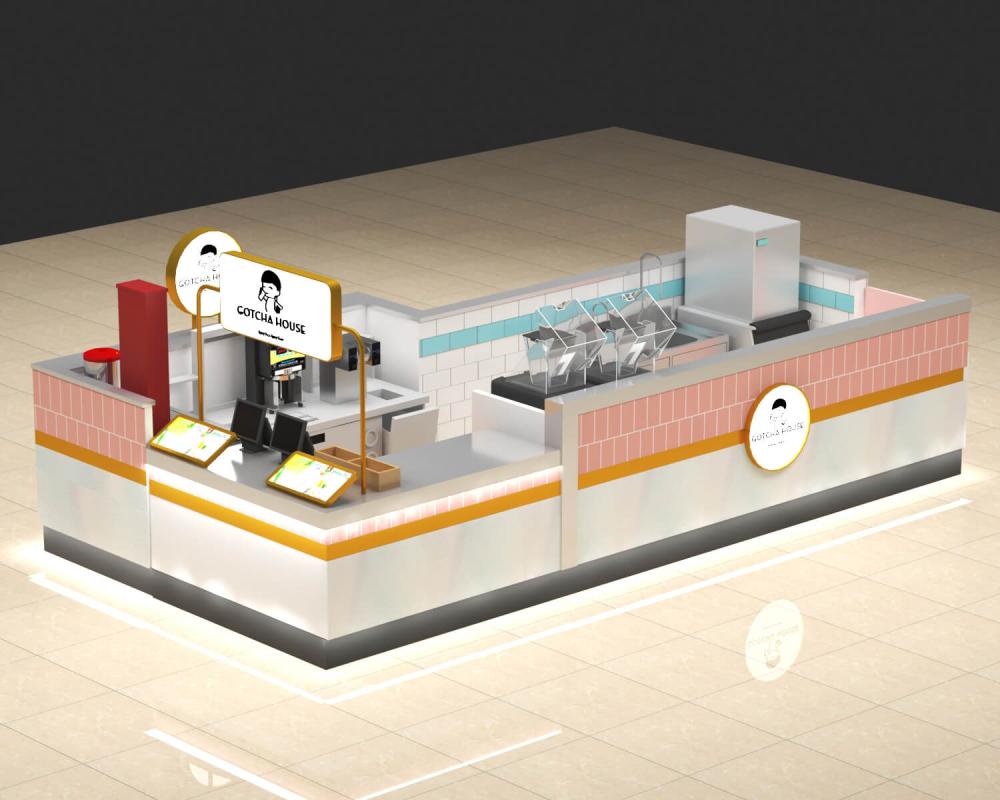
With a larger order, design, setup, material purchasing, and production costs can often be spread across more units.
If you are opening one store now but expect to expand later, tell the manufacturer. The design can potentially be developed with future production in mind.
That can save you from redesigning the entire kiosk when your second or third location opens.
7. Shipping Is Part of the Real Cost
A retail kiosk is large compared with many products sold online.
Even when the kiosk itself has a reasonable factory price, freight and packaging can become a significant part of the total landed cost.
The final budget may include the kiosk, protective packaging, pallet or wooden crate, domestic delivery, international freight, customs-related costs, and local delivery.
For this reason, compare landed cost, not just the unit price shown on a quotation.
What Should You Budget for Your Store?
As a rough 2026 planning figure:
Simple retail counter: around $1,500–$3,000+
Custom commercial kiosk: around $2,000–$6,000+
Large or highly customized kiosk: $6,000–$10,000+
Specialized food or beverage kiosk: potentially higher depending on equipment, plumbing, electrical requirements, refrigeration, and materials.
These are planning ranges, not fixed market prices. A factory quotation can only be accurate after the size, design, materials, quantity, and requirements are known.
How to Get a More Accurate Quote
You don't need a professional drawing to contact a manufacturer.
Send a few basic details:
-
What type of store you are opening
-
Approximate kiosk or counter size
-
A photo or sketch of the design you like
-
Preferred colors and materials
-
Storage requirements
-
Display requirements
-
Equipment that needs to be built in
-
Quantity
-
Delivery location
Even a photo taken from Pinterest or another store can be useful as a starting point.
A good manufacturer can then tell you which parts of the design will affect the price and where there may be opportunities to simplify the construction.
The Cheapest Kiosk Is Not Always the Best Deal
When opening a store, it is tempting to choose the lowest quotation.
But your retail counter will probably be used every day for years. A cheap kiosk with weak construction, poor storage, difficult installation, or a finish that doesn't hold up can cost more in the long run.
The better approach is to build around your actual business needs first, then control the cost through materials, structure, quantity, and production methods.
Whether you are opening a bubble tea shop, candy store, ice cream shop, food store, perfume shop, or jewelry business, a custom kiosk should work as part of the store — not simply fill an empty space.
If you already have a design idea, send the manufacturer your dimensions, reference photo, or even a rough sketch. That is usually enough to start working out what your custom kiosk will really cost.