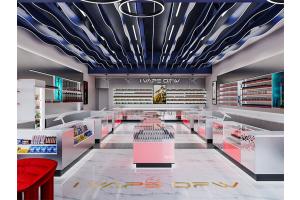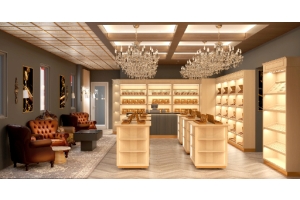

Walk through any American mall this year and you'll notice something: the kiosks are getting harder to walk past. What used to be a folding table with a cash box has quietly become one of the most profitable square footage in retail — if it's designed right.
We manufacture custom kiosks for food, perfume, and jewelry brands across the US, so we see firsthand what makes shoppers stop and what makes them keep walking. Here are the ten design trends actually moving the needle for store owners in 2026.
1. The "Mini Flagship" Mindset
The biggest shift isn't visual — it's mental. Smart owners stopped treating kiosks as temporary booths and started treating them as scaled-down flagship stores. Backlit panels, gallery-style product staging, and quality finishes signal permanence and trust. A perfume kiosk with brushed brass trim and onyx-look panels can command the same price per bottle as a boutique. Customers associate material quality with product quality, especially in beauty and jewelry.
2. 360-Degree Visibility
Most mall kiosks lose money on two sides. In 2026, top performers are designed to sell from every angle — logos, lighting, and hero products facing all four approaches. If a shopper can only discover your products from one direction, you've cut your potential traffic by up to 75%. Ask your manufacturer to treat every face of the kiosk as a storefront.

3. Open, Walk-Around Layouts
The old "counter and wall" format is dying. Shoppers want to browse from multiple angles, touch products, and linger without a staff member hovering. Dwell time is directly tied to conversion — people who stay 90 seconds buy far more often than people who stay 15. Open layouts also let three or four customers browse simultaneously instead of lining up behind one.
4. Lighting That Sells the Product
For jewelry and fragrance especially, lighting is doing the selling. High-CRI LED strips inside display cases make diamonds sparkle and glass bottles glow. Warm perimeter lighting invites people in; focused spotlights on hero items create "must-touch" moments. Owners upgrading lighting consistently report better conversion before changing anything else.
5. Modular Builds That Rebrand Without Rebuilding
Rebranding or rotating a seasonal collection used to mean tearing the whole kiosk down. Modular systems — interchangeable panels, reconfigurable shelving, reusable frames — let you refresh the look for holidays or a new product line at a fraction of the cost. The base structure stays; only the surface changes. For multi-location owners, this one decision can cut refurbishment costs by 40–60%.
6. Try-Before-You-Buy Stations
Cosmetics and fragrance kiosks with tester trays, mirrors, and hands-on stations dramatically outperform locked-display setups. Jewelry brands are adding digital try-on screens. The logic is simple: a customer who sprays a scent or tries on a ring owns it psychologically for a moment — and leaving empty-handed feels like a loss.
7. Contactless-Ready Payments, Built In
Tap-to-pay is no longer a nice extra; US shoppers under 40 increasingly expect it. Kiosks now ship with integrated NFC terminals, QR-code ordering, and clean cable management planned from day one — not added as an afterthought with wires hanging everywhere. A cluttered payment area quietly kills impulse purchases.
8. Sustainability Customers Can See
Eco-conscious materials have moved from marketing line to purchase driver. FSC-certified wood, recycled acrylics, low-VOC finishes, and energy-efficient LEDs appeal to younger buyers — and durable, modular materials simply cost less to maintain over the kiosk's life. Put it on a small sign. Customers read them more than you'd think.

9. Smart Technology With a Purpose
Touchscreens, QR-triggered demos, and digital menu boards are now standard in food and beauty kiosks. The key word is purpose: a screen that entertains is decoration, but a screen that shows a 20-second product story or lets customers build a custom gift set is a salesperson working unpaid hours. Plan the tech around the sales process, not the other way around.
10. Designed for Security After Hours
One detail owners regret skipping: how the kiosk closes. Fully lockable shutters, secure drawers, and display cases that seal up at night protect high-value inventory like jewelry and premium fragrance. The best designs hide this completely during business hours — security that doesn't look like security.
The Common Thread
Notice what links all ten trends? None of them are about making the kiosk look expensive for its own sake. They're about one thing: reducing the distance between a shopper walking by and a shopper buying.
The owners winning with kiosks in 2026 aren't necessarily the ones with the biggest budgets. They're the ones who treat those 50–200 square feet as a real store, plan the customer journey before picking finishes, and build flexibility in from day one.
If you're planning a new kiosk or refreshing an existing one this year, start with the shopper's path, not the color palette. And if you want a design partner who builds food, perfume, and jewelry kiosks for US malls every day — [get in touch for a free design consultation]. We'll show you exactly what your products would look like in a kiosk built to sell from every angle.