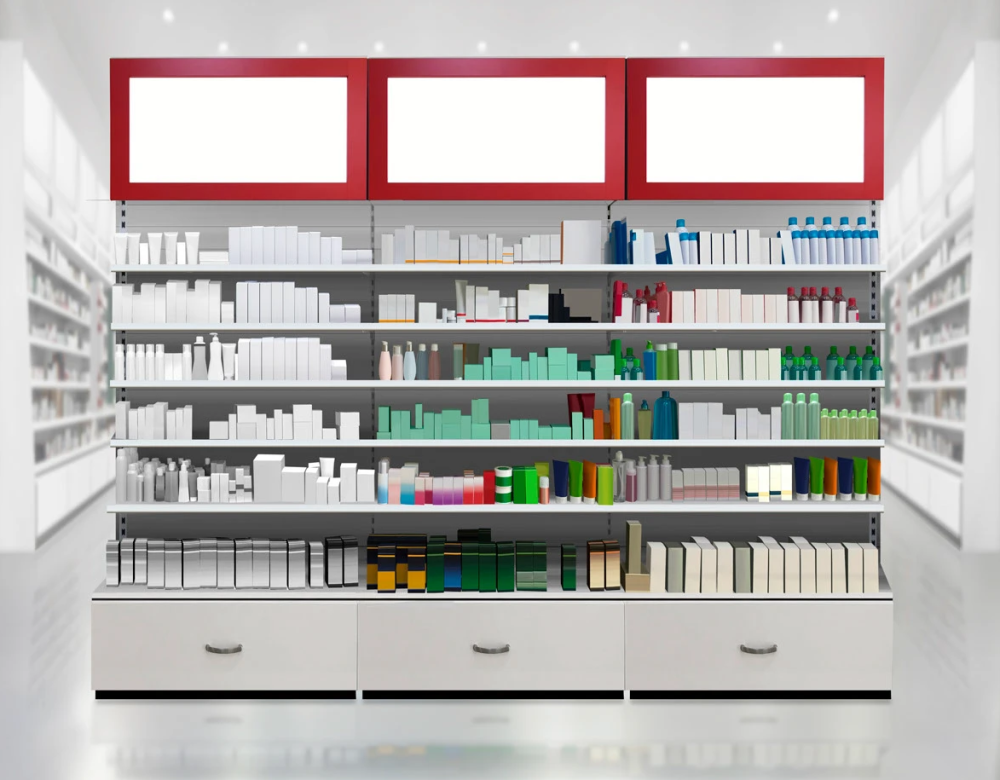
1. On-site Measurement and Functional Zone Division
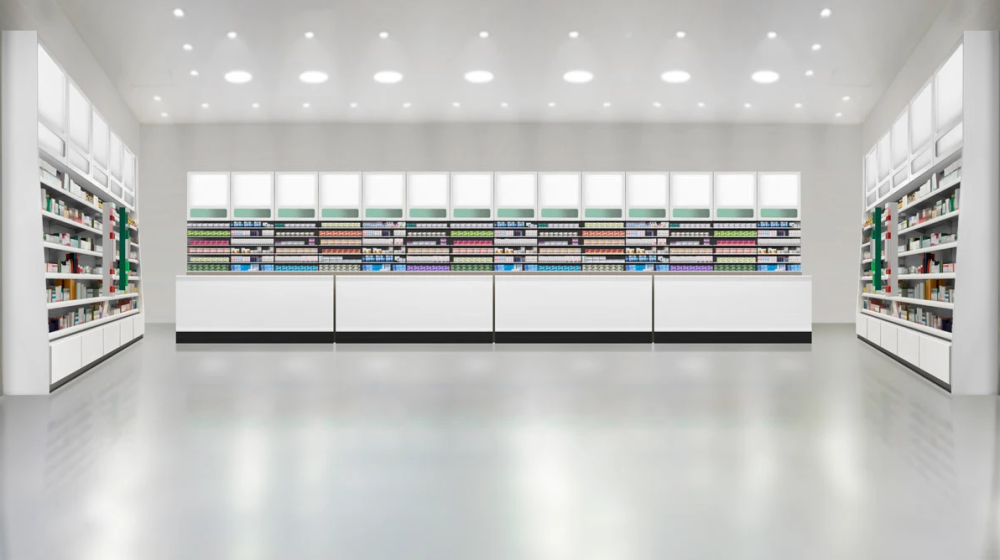
2. Select Shelf Styles According to Usage Scenarios
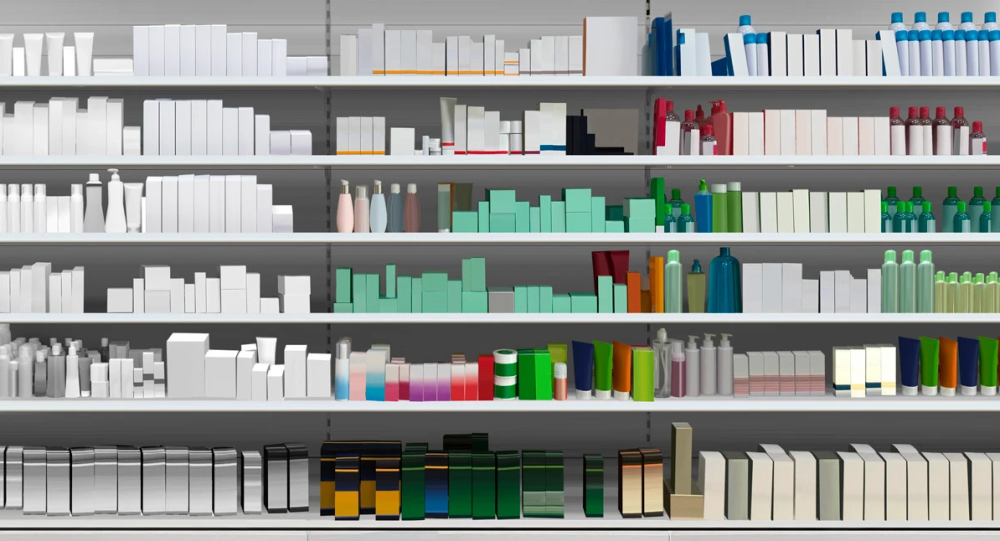
3. Practical Material Selection for Pharmacy Scenarios
Pharmacy shelf materials can’t be selected blindly according to appearance. They need to adapt to high-frequency cleaning, heavy object placement and long-term use scenarios. These are the three most cost-effective and durable materials I have verified in actual projects: Melamine board and MDF with powder-coated surface are the first choice for most pharmacies. The smooth surface is not easy to hide dust, can be wiped and disinfected at will, and the price is very friendly, suitable for most cabinet bodies and drawer structures.
Matching metal steel frames must be used for the main support of display shelves. The bearing capacity is strong enough to cope with the placement of a large number of bottled medicines. The most practical point is that the shelf height can be adjusted freely according to product specifications, without being limited by fixed sizes.
Acrylic material is optional. I generally suggest customers use it for the transparent baffle of high-value skincare and health product display areas, which can prevent dust and improve the grade of the store at the same time. It is worth reminding that do not choose porous and rough materials. They are easy to absorb stains and moisture, difficult to clean, and do not meet the hygiene romers’ viewing of products placed on low shelves and needs to be avoided in advance.
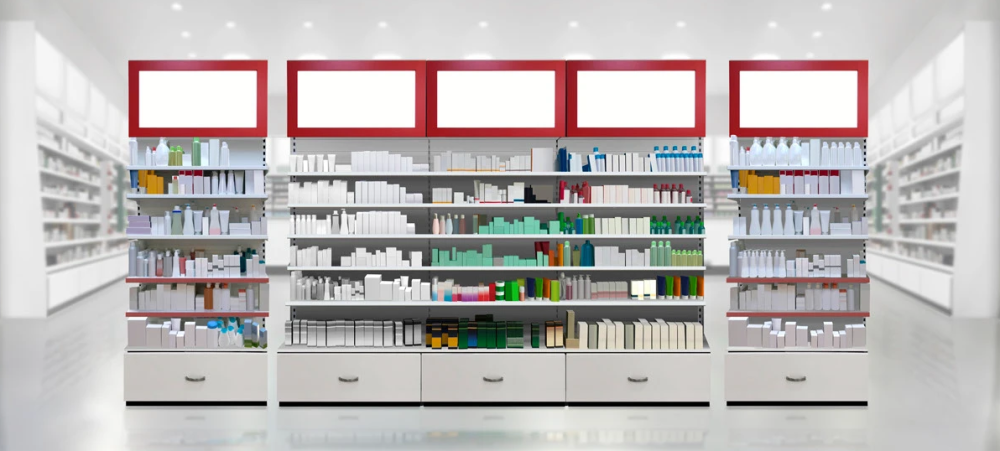
4. Reasonable Product Shelving and Inventory Layout
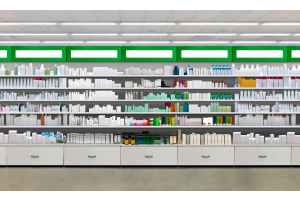
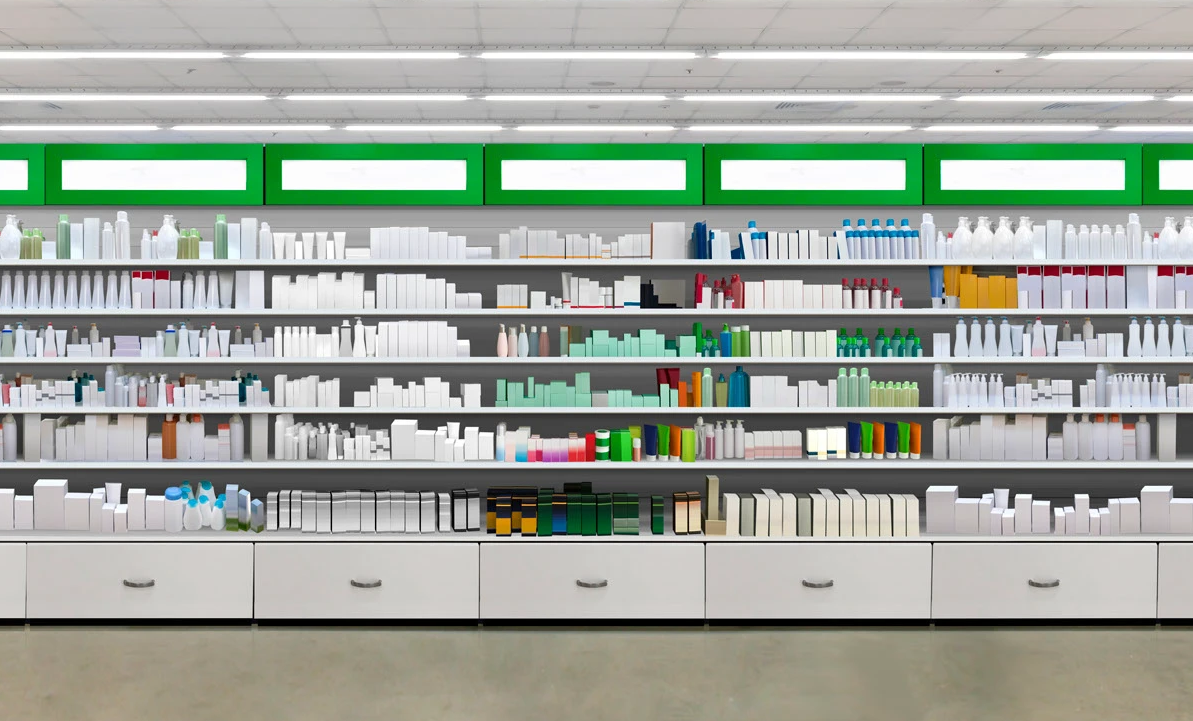
After the shelves are installed, the later product placement determines the shopping experience. I have summed up a set of most scientific placement rules based on retail data: Put promotional products and large bottled products on the top shelf, matched with category signs to attract attention; put hot-selling daily necessities such as eye drops and painkillers on the middle shelf at the eye level of customers, which is convenient for taking and greatly improving transaction efficiency.
Large packages and bulk inventory are placed on the lower shelves, and the bottom drawers are used to store spare goods that are not frequently replaced. In addition, when arranging goods, similar products should be classified and placed centrally, and a certain spare space should be reserved on the shelves to facilitate the subsequent addition of new product lines.
5. Safety and Compliance Details That Must Be Checked
Pharmacy shelf customization has mandatory industry safety standards, which cannot be ignored for beauty and cost savings. In all my project deliveries, these points are strictly checked: The shelf overall structure must be heavy-duty and stable, capable of bearing the weight of a large number of bottled medicines; all edges and corners are rounded to avoid customer and staff bumps and injuries during walking and shopping.
Prescription and special controlled medicines must be stored in lockable drawers and closed cabinets to ensure drug safety. The freestanding island shelves need to be equipped with anti-tip structures to avoid safety accidents caused by shaking.
6. Whole Process of Customization, Production and On-site Installation
The whole process of pharmacy shelf customization from design to landing is very rigorous, and every link needs to be checked one by one: First, provide the store floor plan to the manufacturer, and communicate the functional needs and style preferences in detail. Let the manufacturer produce 3D effect drawings, and confirm the overall effect, size, color and functional configuration before formal production to avoid rework.
After confirming the scheme, the factory will carry out formal production, and support factory assembly or split packaging and transportation according to the store situation. Finally, professional masters will go to the site for installation, shelf debugging and light box circuit docking, to ensure that all equipment can be used normally.
Final Thoughts
After completing the shelf design and layout for countless pharmacies, I deeply feel that qualified pharmacy shelves are not only a set of display equipment, but also a key part of store operation. A well-matched shelving system can optimize the shopping experience of customers, improve the work efficiency of pharmacists, and create a clean and professional store image for a long time, which is very helpful for store sales and word-of-mouth accumulation.