In the global beauty retail landscape, South Korea and the US represent two vastly different business philosophies. As K-beauty continues its explosive growth in the US market—and giants like Olive Young expand their footprint—distinct approaches to spatial design and merchandising aesthetics are converging and clashing.
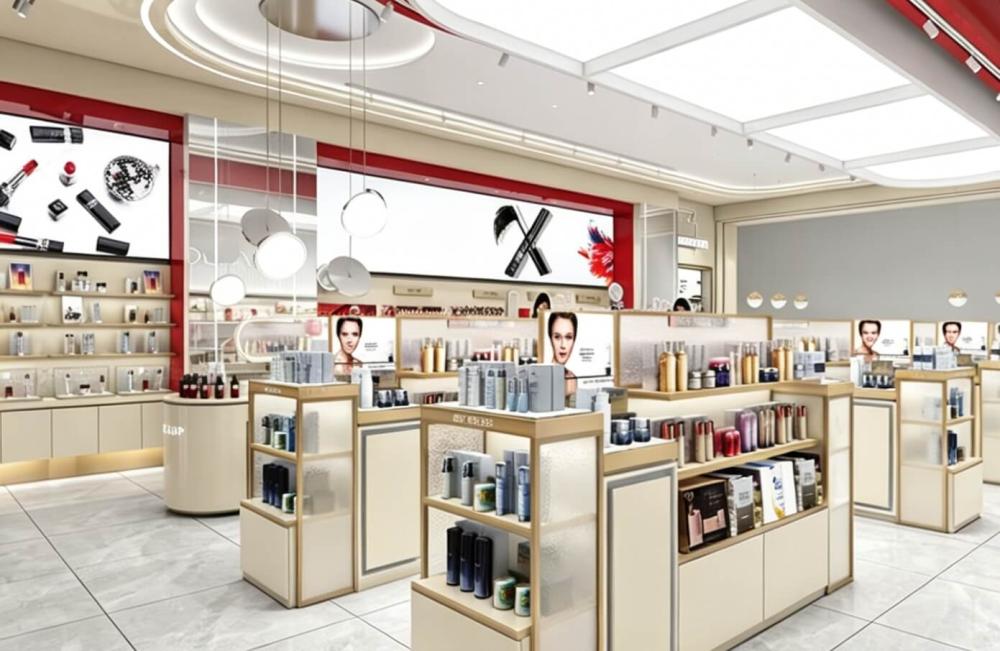
For beauty brands aiming to upgrade physical stores or expand internationally, the storefront is no longer merely a point of sale; it is an amplifier of brand value. As a specialist manufacturer of custom commercial fixtures and retail kiosks, we have analyzed the fundamental differences in store design between these two markets. We found that store fit-outs play a crucial role in enhancing brand value and driving retail performance; here are some of our key findings.
1. Spatial Layout: American "Guided Service" vs. Korean "Boundless Exploration"
Traditional American beauty retail (e.g., Sephora, ULTA) relies on a "guided" spatial logic. Stores typically feature dedicated areas for Beauty Advisors (BAs) and counters for high-end brands, designed to facilitate one-on-one consultations. While this fosters trust, it can also create psychological pressure for younger consumers wary of aggressive sales tactics.
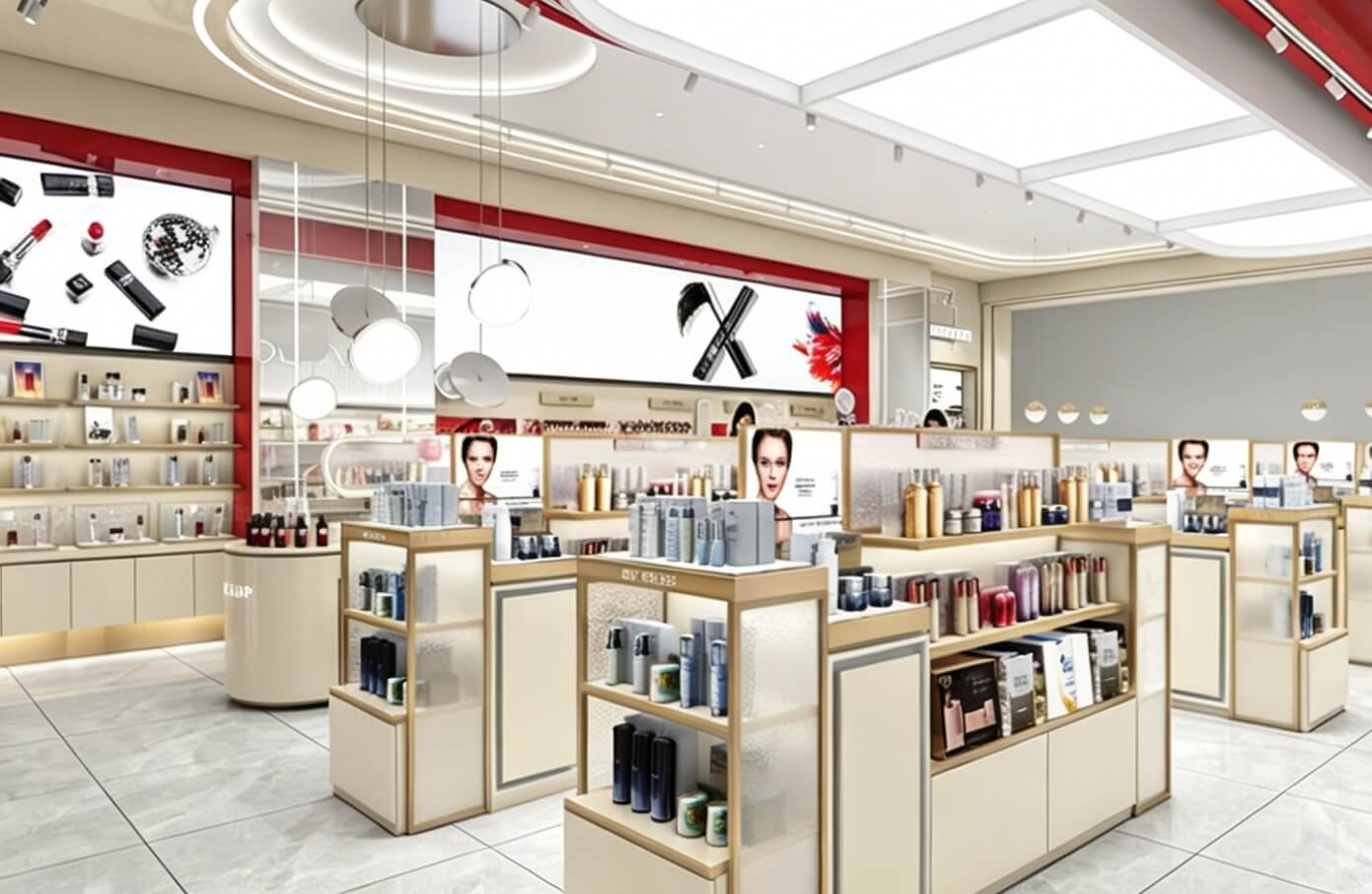
In contrast, Korean beauty stores embrace a philosophy of "boundless exploration." By eliminating traditional physical barriers, they create open layouts that transform shopping into a treasure hunt. This layout supports a "semi-responsive service" model—where staff are available but do not intrude—perfectly aligning with Gen Z's desire for a relaxed shopping experience.
Custom Fixture Solutions:
To cultivate this Korean-style exploratory atmosphere, traditional enclosed glass cabinets can actually act as obstacles. Fully open self-service kiosks and modular island displays break down the physical barrier between customers and products. By lowering counter heights and utilizing frameless glass or transparent acrylic—complemented by soft, concealed LED lighting—these displays serve as visual beacons. They naturally draw customers deeper into the store, significantly extending dwell time and boosting product trial rates.
2. Merchandising Logic: American "Brand Equity" vs. Korean "Ingredient Selection"
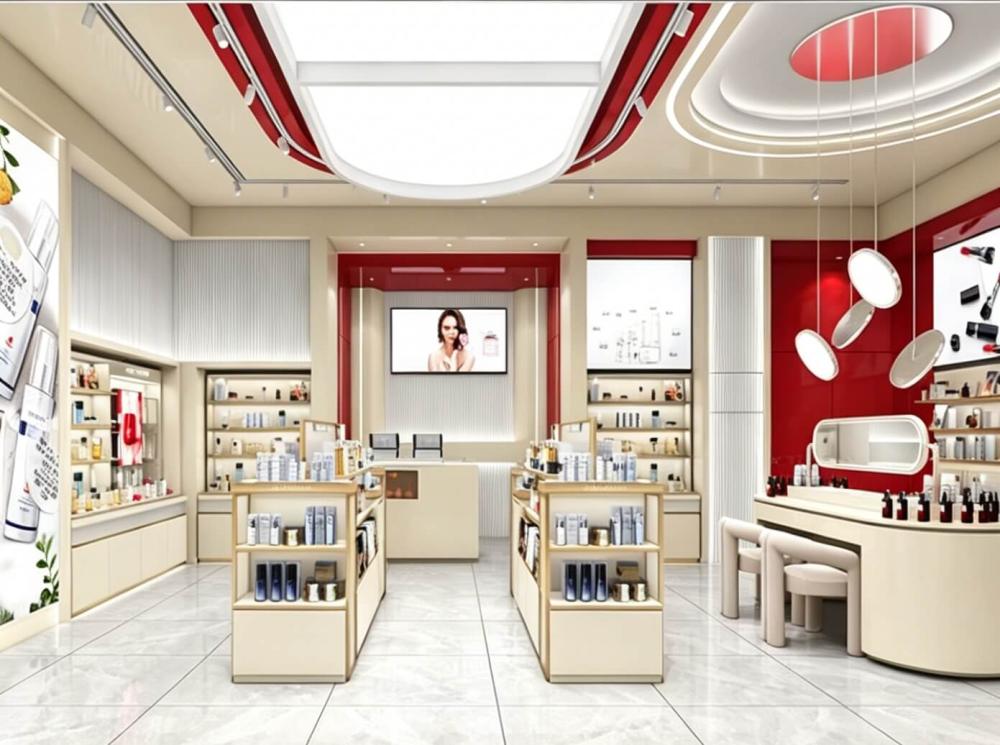
American beauty merchandising relies heavily on brand identity. Display designs are crafted to reflect the brand's visual identity (VI), emphasizing luxury and storytelling. In contrast, Korean-style stores operate as "curated trend spaces." They downplay the dominance of a single brand in favor of "ingredient-led displays" (grouping products by ingredients like PDRN or hyaluronic acid) and "tool-paired displays" (combining skincare products with tools like Gua Sha boards or acne patches). This dynamic approach to merchandising keeps the retail space feeling fresh and constantly evolving.
Custom Fixture Solutions:
To keep pace with the rapid product cycles of "fast beauty," traditional fixed shelving is often too cumbersome and costly. Modular, quick-assembly shelving systems are designed specifically for frequent updates. Brands can reconfigure layouts in minutes based on seasons, trending ingredients, or viral social media products. Furthermore, digital screens and interactive sensors can be integrated directly into self-service kiosks, seamlessly blending ingredient storytelling with product testing—effectively turning the display unit into a silent salesperson.
3. Experiential Touchpoints: US "Professional Testing" vs. Korean "Immersive Sensory Experience"
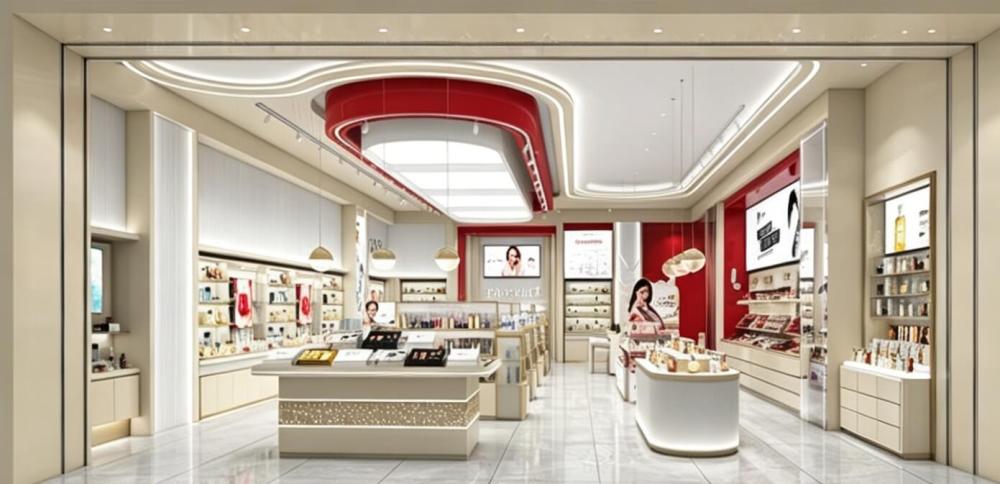
US consumers are accustomed to shade matching assisted by beauty consultants, prioritizing coverage and longevity. Korean stores, however, elevate "testing" into a holistic sensory experience. From built-in sinks and skin analyzers to testing zones meticulously designed with raw concrete and warm textures, Korean stores transform the makeup trial into an immersive journey of self-discovery. This relentless pursuit of emotional fulfillment for the customer is a key driver of their high conversion rates.
Custom Fixture Solutions:
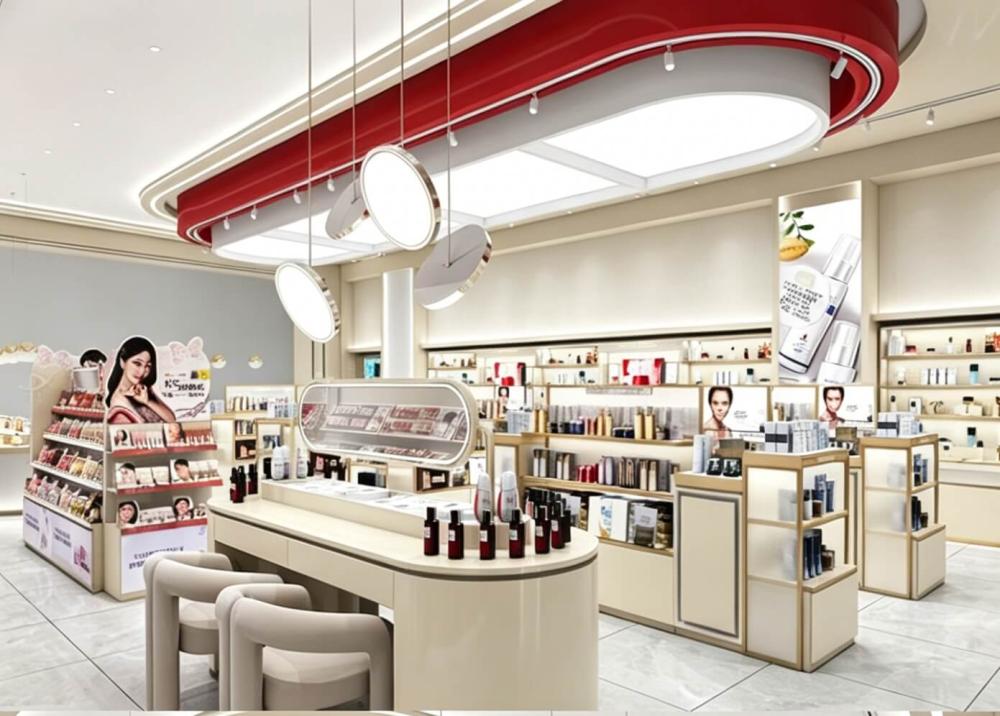
Superior display design must balance aesthetics with functionality. Our custom integrated experiential kiosks seamlessly incorporate testing tables, makeup removal stations, sinks, and even skin diagnostic tools into a unified structure. Material choices move beyond cold industrial styles, utilizing matte metals and eye-catching colors. Paired with professional-grade, anti-glare, high-CRI (Color Rendering Index) lighting, these designs capture customer attention amidst the visual clutter of the retail environment, sparking a desire to explore and purchase. Whether replicating the curated product philosophy of South Korea or integrating professional American-style services, realizing your vision requires flawless physical execution. As a direct manufacturer, we deeply understand the pain points of beauty retail:
Rapid Turnaround: Beauty trends shift in the blink of an eye. We provide products that meet international safety and environmental standards, along with end-to-end services—from design to mass production—that significantly shorten setup times, helping your brand seize the initiative.