When you walk past a candy store, what makes you stop and walk inside? Is it a bright, colorful storefront, eye‑catching display stands, or well‑organized shelving that shows every candy product clearly? Many new candy shop owners run into identical pain points: they spend heavily on store renovation, yet customer flow stays low; shelves look messy even after careful sorting; kids get attracted by decoration but parents do not make purchases; floor space is wasted while hot‑selling candies lack proper display space. Read this article and you can get more ideas. Whether you are planning a brand‑new candy shop or upgrading an existing store, you can get actionable reference for your project.
What Storefront Design Makes Walk Into Candy Store
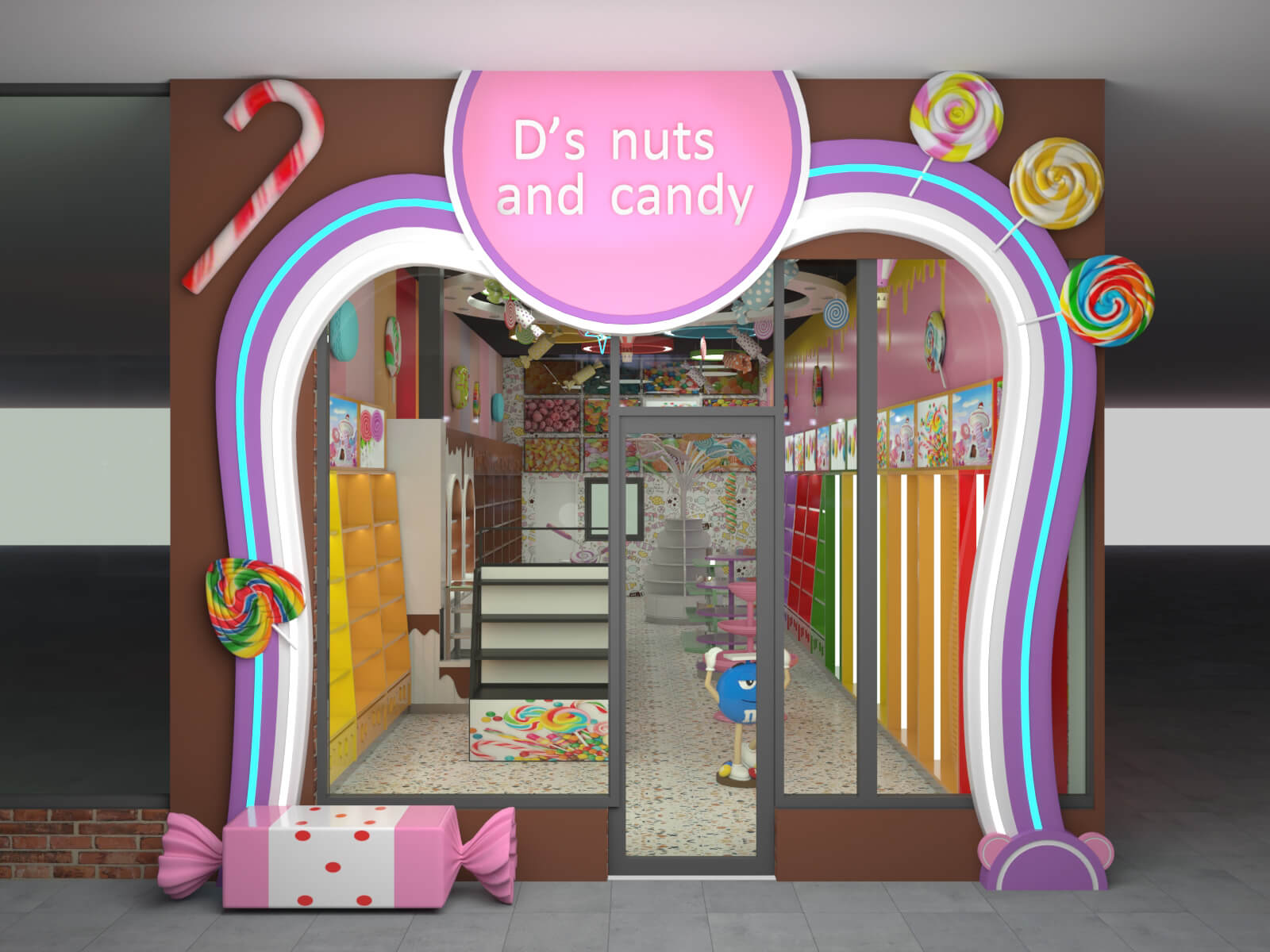
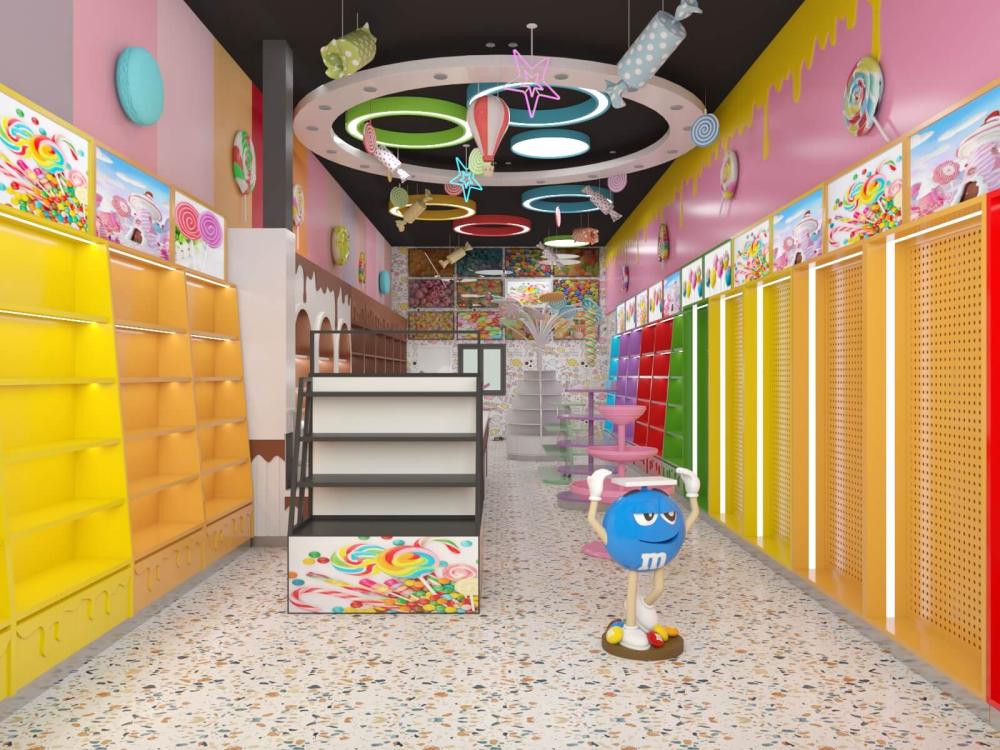
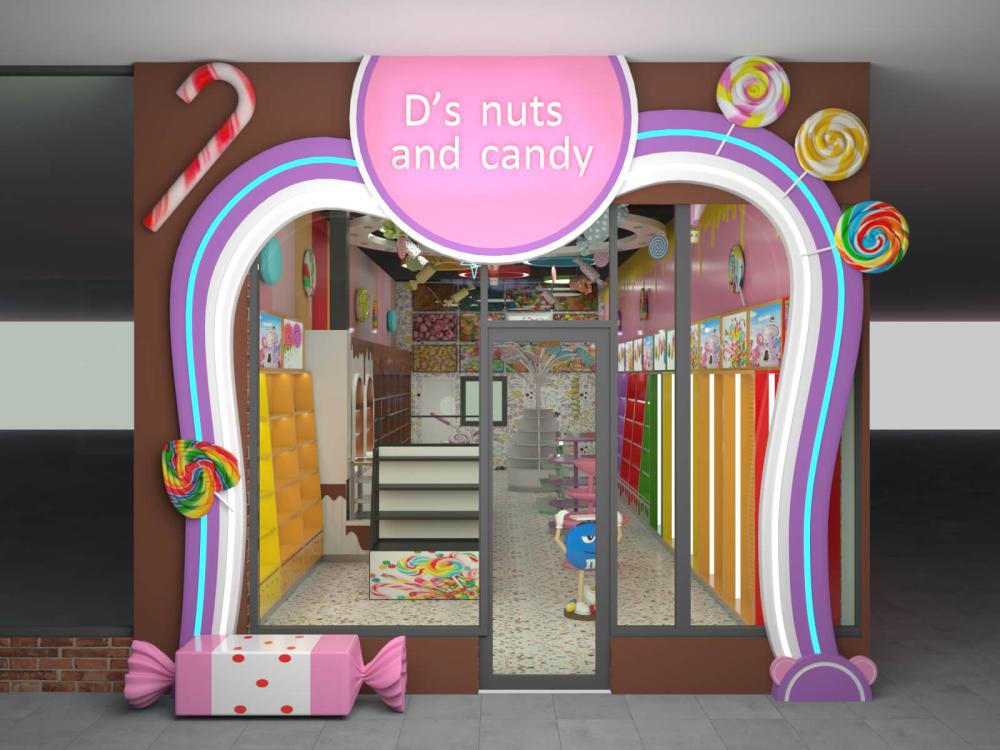
The entrance arch structure acts as the visual focal point. In our reference sweets‑shop case, we built a large curved arch doorway with layered LED light strips. We integrated oversized 3D candy, lollipop and candy‑cane sculptures onto facade panels. These large‑size decorative props can be seen from far distance. For candy retail, children are a core customer group; cartoon‑style three‑dimensional decorations can grab kids’ attention rapidly, and pull families toward your shop. If your window area is large, place several small candy‑themed sculptures near the glass interior side, to strengthen theme atmosphere from outside view.
One frequent question: should we add many decorative stickers on glass windows? Our practical suggestion is no. Too many printed stickers cover glass surface, block interior view, and make your store look cluttered. Reserve glass transparency, place physical display props inside, this gives a higher‑end retail feeling. A well‑executed storefront does not equal excessive decoration. Every facade component should serve one goal: tell outside viewers “this is a fun candy store” and invite them to enter.
How to Plan Interior Layout
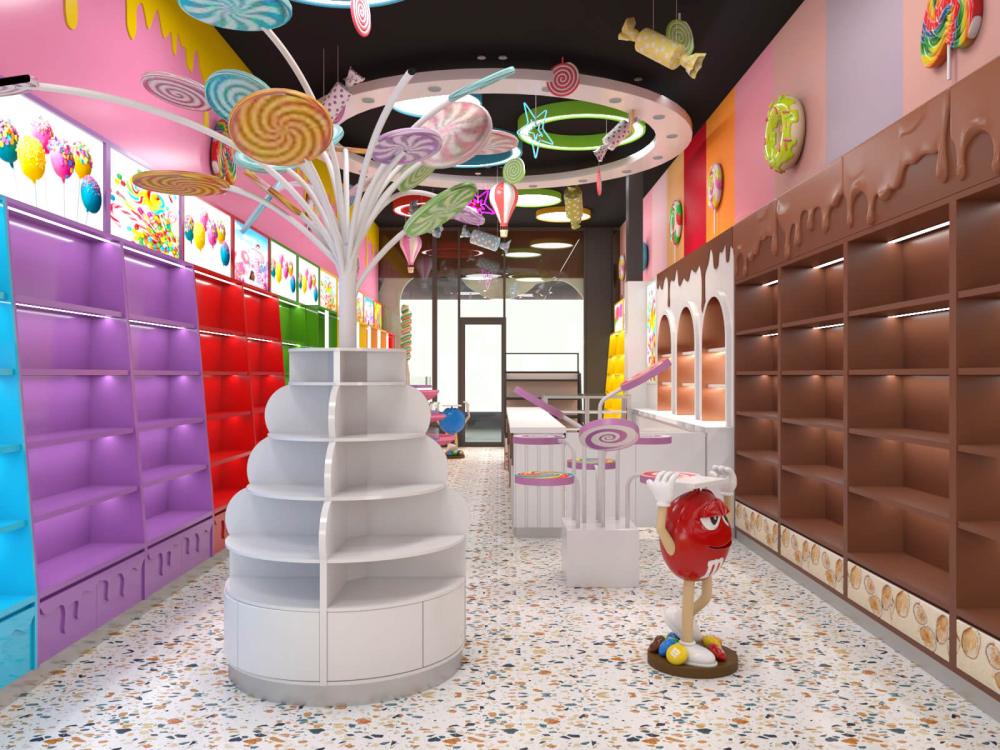
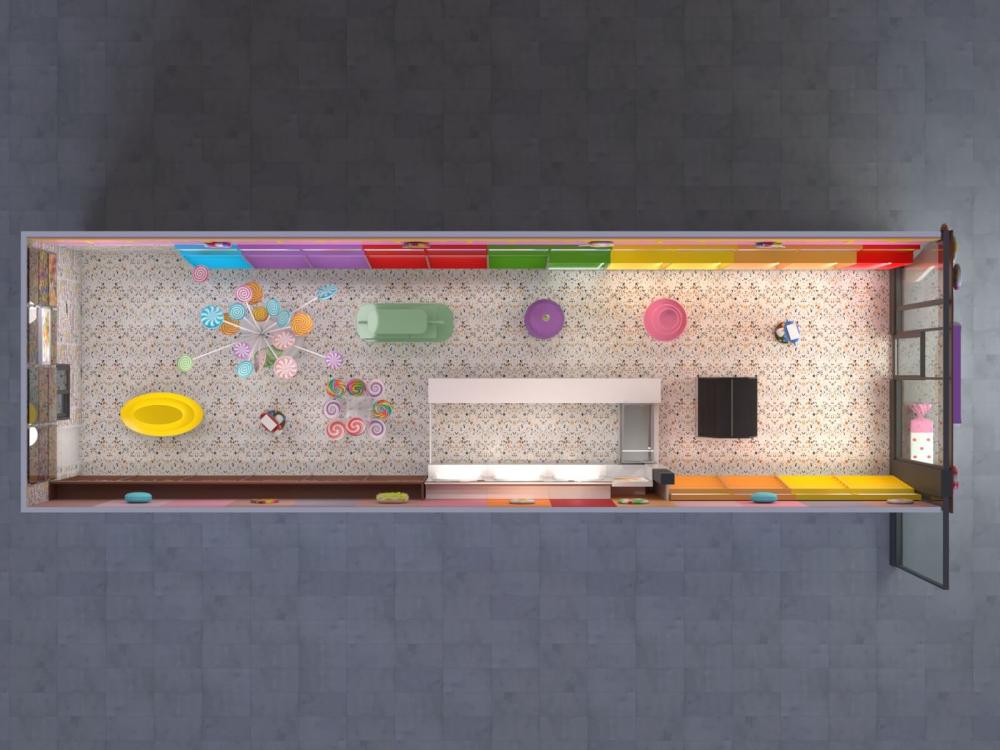
When customers enter the candy store door, open‑style themed island stands sit in near‑entrance area for impulse‑buy products, like lollipops and gift‑pack candies. Wall‑side continuous shelving is used for bulk candy, jar‑packed sweets and nut products. The cashier counter sits near exit position. Our custom counter in this project applies chocolate‑drip surface detail; it matches overall candy theme, and contains hidden inner storage space for packaging bags, weighing scales and spare inventory.
What about dead corners in the sugar shop? Many stores leave back corners unused. You can place curved corner shelving units there, instead of standard straight shelves. Curved custom fixtures make corner space usable and guide customer flow deep into the sweets store. Another practical tip: do not place tall freestanding racks close to entrance. Tall furniture blocks interior sight. Put low‑profile, open‑concept island stands near entry. High wall shelving can go along side walls.
Custom Retail Fixtures
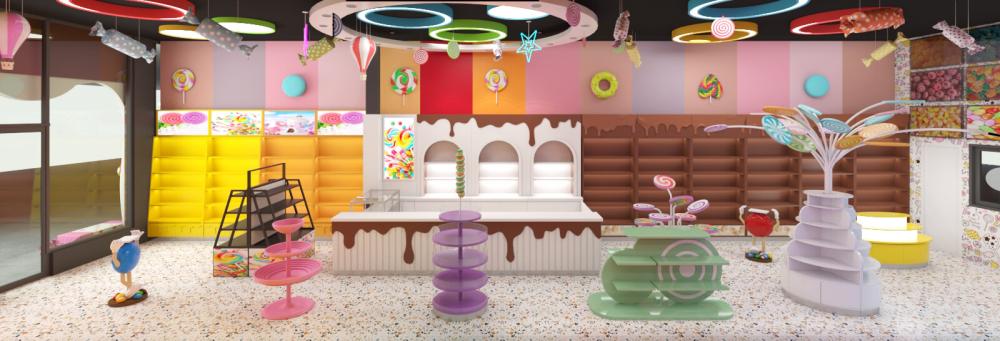
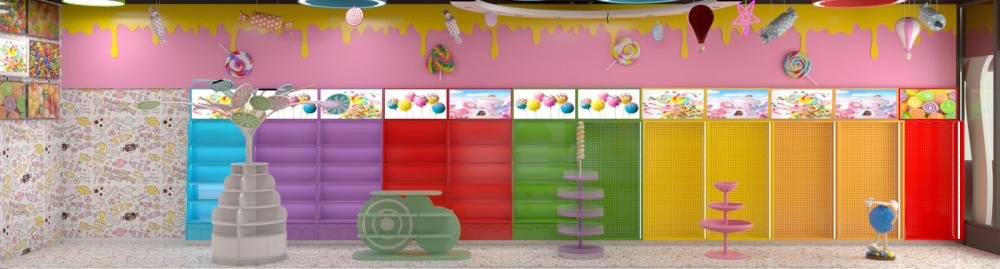
What materials work best for candy shop fixtures? For main shelf bodies, high‑grade MDF with high‑quality baking paint is widely used. It supports bright saturated colours: purple, red, green, yellow, pink, as we applied in this candy‑shop project. The baking-paint surface is smooth, dust‑proof, and easy to wipe clean. Candy retail generates lots of sugar dust; easy‑to‑clean surface reduces daily cleaning workload.
Lighting is non‑negotiable for candy displays. Every wall shelving unit should install built‑in LED strip lights along shelf edges. We suggest 3000K‑4000K neutral‑white LED light source. Do not use overly yellow warm light, it distorts candy real colour. Also avoid super‑cool blue‑toned light. For special‑shaped island displays like lollipop‑tree stand, multi‑tier round rotating racks, build light sources inside these custom structures.
Different candy types need dedicated fixture structure. Bulk loose candy needs open tiered shelves with back panels. Lollipops need special multi‑layer circular display stands. Gift‑box candy suits deeper wall cabinet shelves. In our case project, we also apply perforated hole‑panel wall sections. Hole panels allow flexible hook installation, you can hang candy bags and small packaged goods, and adjust hook positions later when product assortment changes.
Colour Strategy & Themed Decoration
Candy shops naturally lean toward bright, playful colours. Set one base colour plus multiple accent colours. Base colour stabilises overall visual effect; accent colours bring fun candy‑shop feeling. For themed decorative props: oversized lollipop ornaments, hanging candy‑shaped pendants, cartoon character sculptures can lift atmosphere. Place cartoon figure sculptures at sparse positions, for example near entrance and middle aisle, as photo‑taking spots for visitors. Kids like taking photos beside these figures, this brings social‑media word‑of‑mouth for your store.
A question many operators ask: will bright‑coloured candy store only attract kids, and push away adult buyers? The answer lies in colour proportion. If 80 % of space is chaotic neon bright colours, adult customers feel uncomfortable. Reserve base neutral or low‑saturation tone for 40‑50 % wall and fixture area. Bright accent colours apply on shelving and partial wall sections only. In this way, you keep fun candy‑shop atmosphere, meanwhile maintain retail maturity, to attract both children and adult candy buyers.
Visual Merchandising Matched Custom Fixtures
Place impulse‑purchase goods at high‑exposure positions. Right after the sugar store entrance, your central island stands should put lollipops, mini gift candy boxes, novelty sweets. Customers who just enter the shop have strongest willingness for impulsive buying. Wall shelving at eye‑level height should arrange your hot‑selling and high‑margin candy items. Lower shelf layers place large‑size jar‑pack bulk candies. Upper shelves can store big gift‑box products. Closed lower storage cabinets of custom fixtures hold spare inventory, for fast replenishment.
Make‑good use of colour sorting. Group candies by colour family on shelves. When similar‑colour sweets sit together, visual effect is neat and attractive. Custom multi‑colour shelving units help you divide product zones naturally. For lollipop tree‑shape island stands, arrange multi‑colour lollipops evenly across all branches, avoid one‑sided accumulation of products. Also think about kid‑customer shopping safety. All island‑display stand corners should adopt rounded‑corner custom processing. Sharp right‑angle corners create collision risk for running children.
We believe successful retail design is not about fancy visual effect. It is design that solves real‑world retail pain points, fits your product, serves your target customers, and supports your long‑term store operation. Every custom shelf, counter and decorative structure should serve one final purpose: bring more visitors, and convert visitors into paying customers. Whether you're renovating your candy store or opening more shops, contact us. We can discuss solutions together to make your candy store stand out.