The display cabinets you pick make the very first impression on every customer walking into your optical shop. They also change how long people stay browsing, and even how much they’re willing to pay for your frames. There are so many different display options out there: cheap aluminum racks, flimsy particleboard counters, and custom solid wood cabinets. Most first-time shop owners pick the wrong layout and end up paying extra to redo everything later.
I’ve helped design custom cabinet sets for nearly a hundred eyewear shops, both locally and overseas. I’ve seen so many owners run into avoidable renovation headaches. Looking at all the shop projects we finished in 2026, I put together this Top 4 list of walnut light-luxury display cabinets—these four designs get the most repeat custom orders and positive feedback from shop owners. Every option comes with real photos of fully finished stores. If you’re planning a new shop build, a full remodel, or a small mall counter refresh, you can match these layouts directly to your shop’s shape, budget and customer base.
All four cabinet styles use the same high-quality base materials: multi-layer walnut wood panels, 4000K anti-glare warm white LED strip lights, and low-iron tempered glass with no ugly green edge tint. The only differences between them are how they’re laid out, how well they fit different shop sizes, and how you arrange your frames on them. We’ll go through each style step by step, starting from rank 4 up to our top-selling pick.
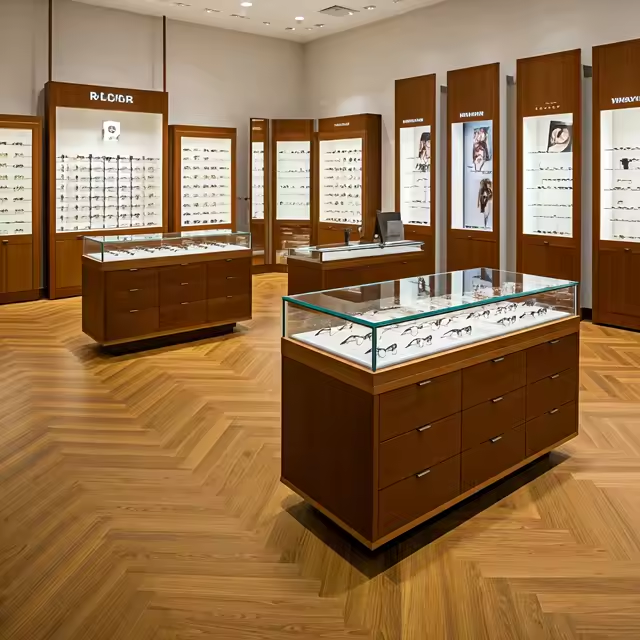
Rank 4: Slim-Leg Long Central Display Counters For Street Shop Walk-In Traffic
Standalone street eyewear stores, small boutique shops that rely on social media posts to draw customers, and mall counters next to big floor-to-ceiling windows. Great for spaces between 50㎡ and 100㎡.
Real Shop Layout Details You’ll See In The Photos:
1. The central display islands use thin walnut support legs instead of thick full-bottom cabinets. They never block your street-facing windows, so people walking past can see every frame style clearly from the pavement.
2. Wall displays are split into separate modular glass sections. You can split sunglasses and regular prescription frames onto different shelves, and built-in drawers below hold small shop supplies: lens cloths, screwdrivers, spare frame cases and more.
3. We add recessed backlit logo panels on side walls. These act like free outdoor signage—passersby can spot your brand name from far down the street.
4. Natural daylight from your shop windows mixes with the internal cabinet lights for soft, even lighting on all frames. You won’t need extra studio lights to take clear photos for social media posts or local review pages.
Real Perks For Day-To-Day Shop Operation:
1. Brings in more random street customers: The slim cabinet design keeps your windows fully visible. More people will stop and walk in if they can see your full frame collection from outside.
2. Super easy for online marketing: Light wood flooring paired with dark walnut cabinets creates soft, balanced tones. Your in-store photos will look clean and professional on short video apps and local review sites, no extra props needed.
3. Doesn’t make small shops feel cramped: The thin support legs cut down the bulky look of full display counters. Even 50–60㎡ shops will still feel open enough for customers to walk around comfortably.
4. You can take the cabinets with you if you move: The length of each central island can be cut to match your window size. If you later move shop or expand your space, you can take apart the cabinets and reinstall them, saving money on brand new custom builds.
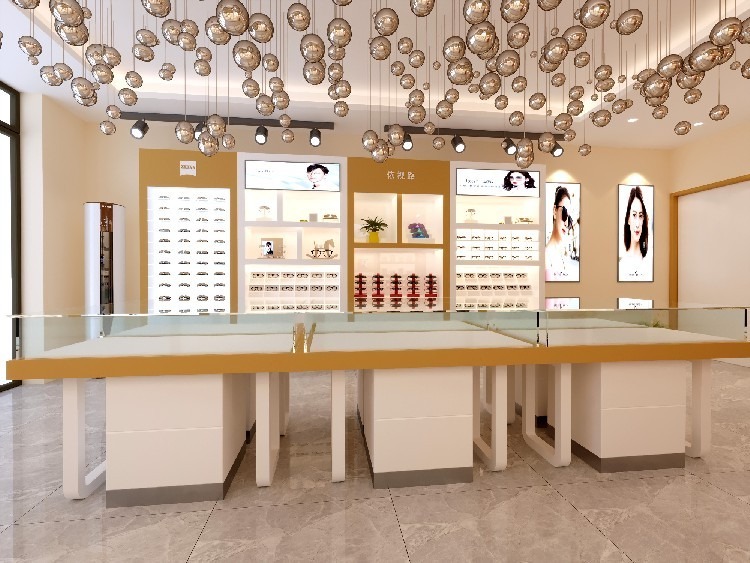
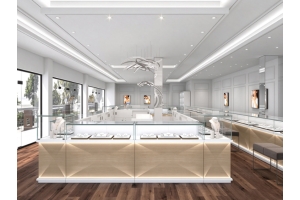
Rank 3: Minimal Framed Partition Display Pillars For High-End Boutique Shops
Small designer eyewear boutiques selling imported frames, exclusive brand mall counters, eyewear zones inside beauty clinics, and premium shops inside office buildings. Best for spaces from 70㎡ to 130㎡.
Real Shop Layout Details You’ll See In The Photos:
1. Instead of covering full walls with cabinets, we space out separate illuminated frame pillars across the shop. Each pillar holds one single category of frames, so customers can browse without mixing styles together.
2. Every pillar has soft backlit layered shelves, plus a cutout spot at the top for your backlit brand logo. One single pillar can work as a standalone brand feature wall.
3. We place two low square glass islands spaced apart at the front and back of the shop. This leaves wide empty walkways with full-length fitting mirrors, so your shop never feels packed full of furniture.
4. We run matching light hardwood floors through the whole space, with no extra dividing walls. This creates a quiet, calm vibe that doesn’t feel like a busy mall stall, giving your customers a more high-end shopping experience.
Real Perks For Day-To-Day Shop Operation:
1. Lets you charge more for premium products: Freestanding lit pillars give you dedicated space to showcase imported frames and custom high-index lenses. Customers instantly pick up on your shop’s professional, luxury feel and are far more open to higher price points.
2. Makes browsing simpler for customers: Frames of different price ranges and brands get their own dedicated pillars. Shoppers don’t need to dig through messy mixed stock, and your staff can point customers to exactly what they’re looking for quickly.
3. Keeps customers in your shop longer: We leave lots of empty open space instead of filling every wall with cabinets. Customers have plenty of room to walk around, try on frames, and take their time choosing without feeling rushed.
4. Gentle lighting with no lens glare: Diffused LED strips inside each pillar stop harsh bright light bouncing off lenses, showing off all the fine details of metal and hand-finished acetate frames.
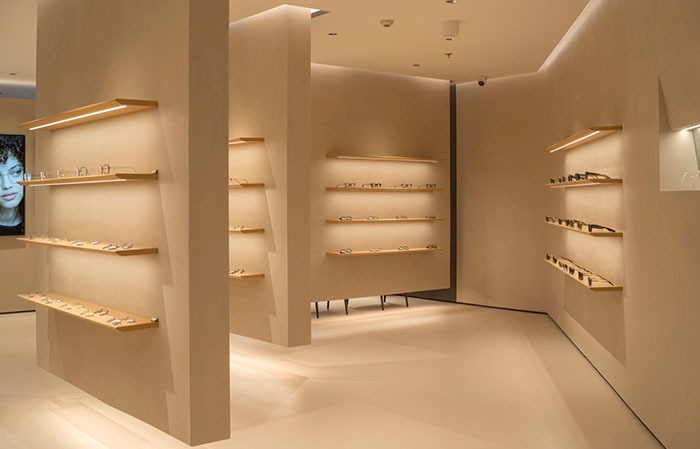
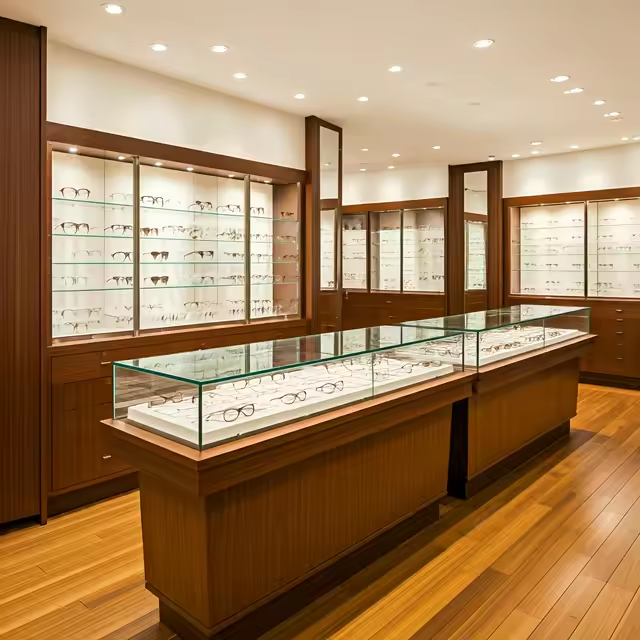
Rank 2: Extra Storage Connected Long Central Display Counters For Narrow Shop Spaces
Long thin street-side small shops, local community eyewear stores with affordable pricing, and tiny corner counters inside malls. Our top pick for elongated shop layouts between 40㎡ and 70㎡.
Real Shop Layout Details You’ll See In The Photos:
1. A full floor-to-ceiling glass display wall sits right at your shop entrance. Multi-layer glass shelves hold thousands of frames neatly, with no messy scattered stock.
2. One long connected two-part glass island runs straight down the center of the shop. This doubles your display surface area, and we wire all the lighting into one single unified circuit system.
3. Closed storage cabinets and multi-level drawers sit under both wall displays and central islands. You can store bulk frame stock, spare lenses, repair tools and all packaging supplies inside—no need to rent a separate off-site storage room.
4. Matching hardwood floors run the full length of the shop, with no extra dividing pillars. We use every single inch of your narrow floor space for displays or walking room.
Real Perks For Day-To-Day Shop Operation:
1. Uses every bit of narrow shop space efficiently: Connected long islands run parallel to your shop’s length, so you don’t waste any walkway space. They hold roughly 60% more frames than separate standalone small islands.
2. Costs less to custom build: Integrated cabinet structures cut down extra frame and hardware costs. You get far more display room for a lower total price compared to buying multiple separate islands.
3. Built-in storage cuts extra warehouse costs: Double storage space under walls and islands fully covers all stocking needs for small and medium-sized eyewear shops.
4. Easy and cheap to maintain long-term: One single lighting circuit powers the whole island, making light checks, repairs and strip replacements much simpler, cutting down ongoing upkeep costs.
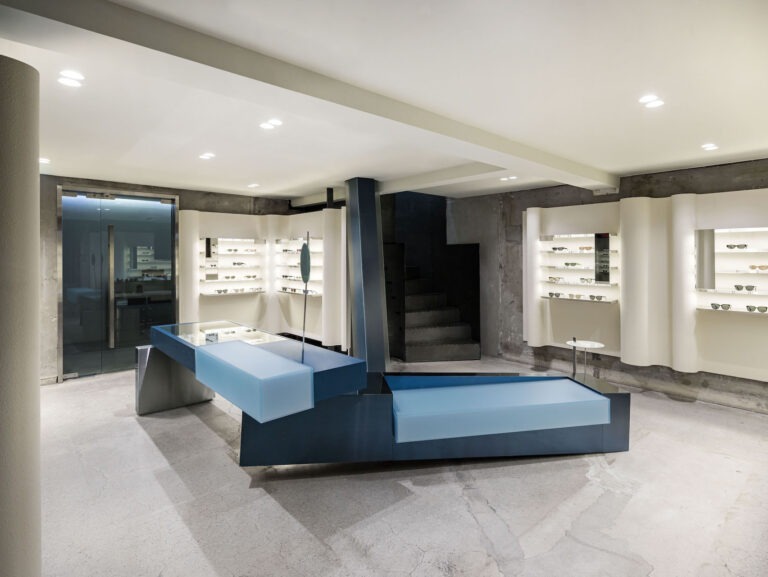
Rank 1: Separate Square Multi-Island Mall Display Cabinets
Standard square retail units inside shopping malls, large all-range eyewear shops covering 80–150㎡, multi-brand shared mall counters, and flagship shops in busy central commercial areas.
Real Shop Layout Details You’ll See In The Photos:
1. We space multiple independent square islands apart from each other. This spreads customers out evenly, so you never get big crowds crowding one spot on busy weekends and holidays.
2. Lit freestanding pillars line the outer edges of the shop. We assign each pillar a dedicated frame category: business-style frames, kids’ eyewear, luxury sunglasses and more.
3. Replaceable backlit poster panels sit on the front of every pillar. We use the first pillar right at your entrance as your main brand feature wall, so new customers notice your shop style the second they walk in.
4. Herringbone wood flooring paired with dark walnut cabinets creates a layered, premium look. The open square layout lets customers see every corner of the shop with no blocked sightlines.
Real Perks For Day-To-Day Shop Operation:
1. Handles huge weekend crowds perfectly—ideal for mall shops: Square islands let customers walk all the way around to try frames, and spaced multi-island layouts spread crowds evenly so there’s no overcrowding at peak hours.
2. Flexible layout for multiple brand lines: Every pillar and island works as its own separate unit. If you stock several different eyewear brands, you can easily split them into their own dedicated display zones.
3. Fully meets all mall construction rules: We design all modular cabinet wiring, lighting and under-cabinet heat gaps to match standard mall property requirements. You won’t need to rewrite and resubmit construction drawings multiple times for approval.
4. Low renovation risk with proven results: Thousands of mall eyewear shops chose this layout in 2026. The build process is fully refined, with steady custom production lead times—you won’t waste weeks back-and-forth adjusting designs.
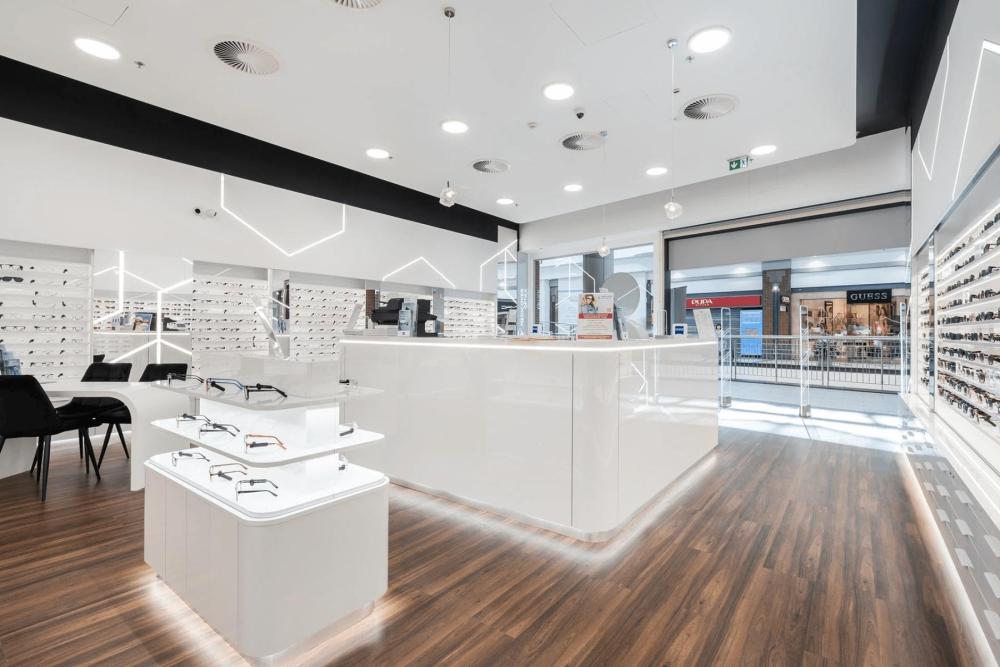
Quick Layout Matching Guide: Pick The Right Design For Your Shop
1. If you run an 80㎡+ square flagship shop inside a mall: Go straight for Rank 1 multi-square-island layout. It handles big crowds and separate product zones better than the other three styles.
2. If you own a narrow community shop under 60㎡, with a small renovation budget and a huge range of frames to display: Prioritize Rank 2 connected long island cabinets. You’ll get maximum display and storage space for the same spending budget.
3. If you sell high-end imported frames and focus on high-margin eye care, and want a quiet luxury boutique atmosphere: Choose Rank 3 framed partition pillar cabinets—they immediately boost how much customers will pay for your premium products.
4. If your shop sits on a busy street, relies on random walk-in customers, and you regularly film in-store content for online promotion: Pick Rank 4 slim long window-facing islands to naturally draw more people off the street into your shop.
Closing Inquiry Note
All four walnut eyewear display cabinet styles in this list can be fully customised: adjust dimensions, light temperature, add engraved brand logos, and change internal storage structures to fit your exact needs. Just send over your shop floor plan, and we’ll put together a free 3D layout render to show how the full cabinet set will look once installed in your space.
Whether you’re renovating a local domestic eyewear shop or placing bulk wholesale orders for overseas mall counters, we can send you itemised cost breakdowns, physical material sample swatches, and a full portfolio of finished shop photos. If you need construction CAD drawings or full lighting setup checklists, leave a comment and share your shop’s total size and floor plan shape.
FAQ
Q1: Will walnut cabinets scratch easily when we place frames on them every day?
A1: We coat all cabinet surfaces with matte scratch-resistant closed paint. They hold up much better against daily frame placement and regular wiping compared to shiny particleboard counters.
Q2: Do we really need low-iron tempered glass for central display islands?
A2: It’s highly recommended if you’re running a high-end shop. Standard glass has an obvious green tint along all edges, which makes your whole shop look less polished and cheap.
Q3: What light temperature works best for eyewear shop counters?
A3: Every finished shop photo in this guide uses consistent 4000K neutral warm white light. Cool stark white light makes frames look cheap, while overly warm yellow light distorts the true colour of your frames—we don’t suggest either option.