In the field of jewelry retail, store design serves as an external manifestation of brand culture and a crucial factor in attracting consumers and enhancing the shopping experience. The jewelry store in this set of pictures showcases exquisite design concepts and profound aesthetic appeal in every aspect, from spatial planning and material application to color coordination and soft - furnishing arrangement.
Spatial Layout: Flexible Zoning and Guided Exploration
Regional Division and Guided Paths
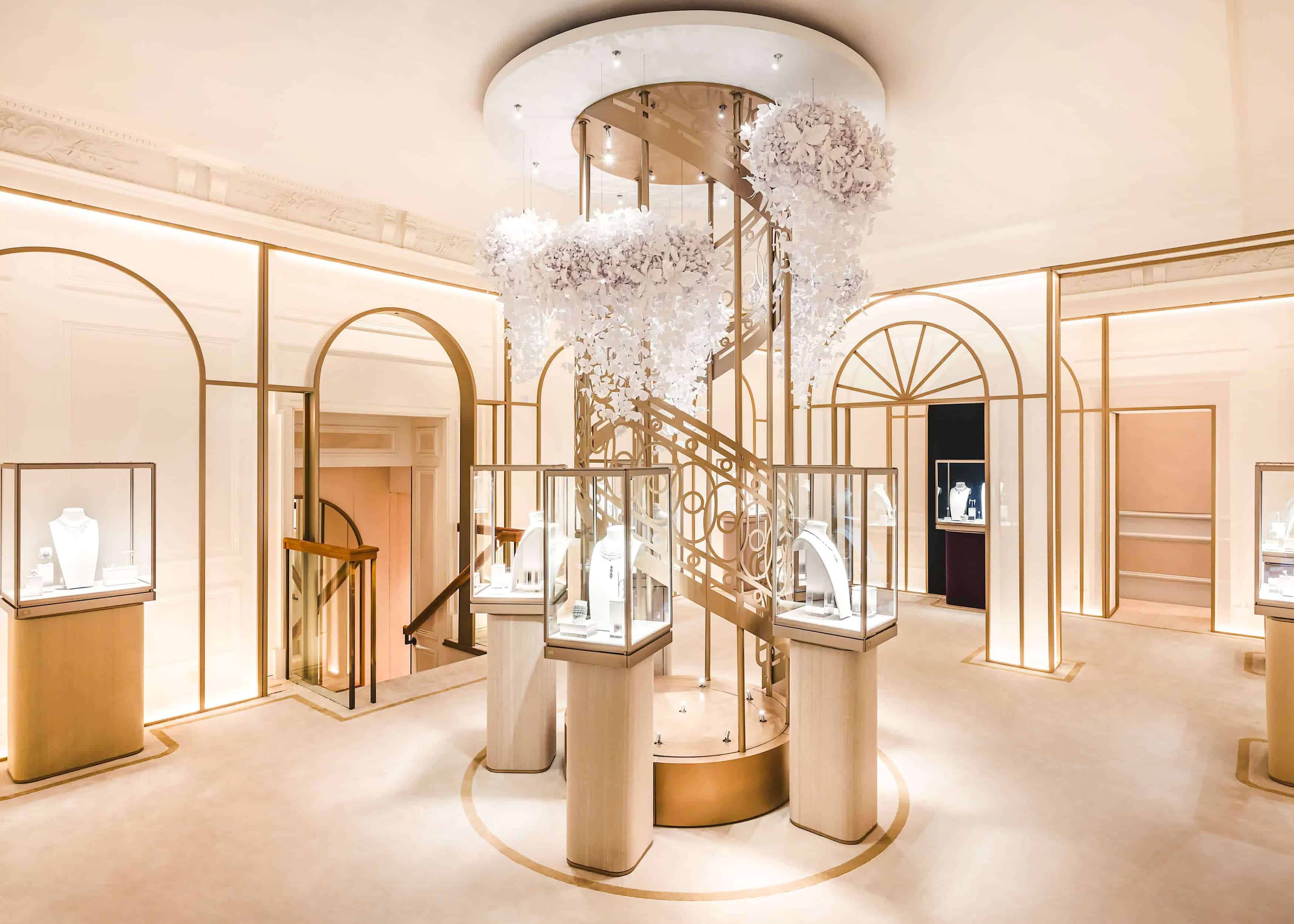
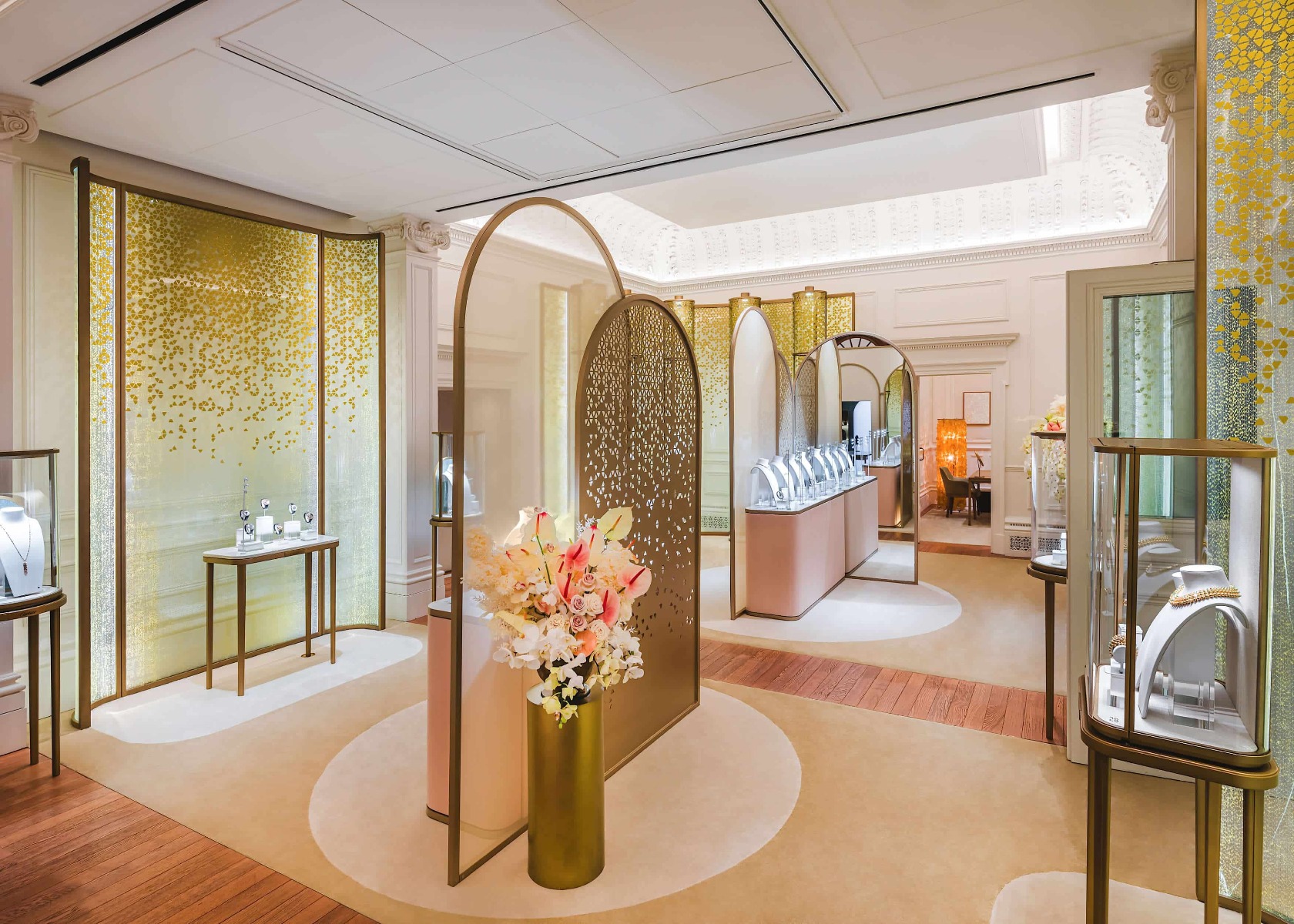
Upon entering this jewelry store, one is immediately struck by the ingenious spatial zoning achieved through arched doorways, hollow screens, and display props. The arched doorways, with their soft curves, break the stiffness of traditional linear spaces. Visually, they offer a smooth sense of extension, and functionally, they naturally separate different display areas. For example, starting from the entrance, the arches guide customers deeper into the store, allowing them to naturally view the jewelry displays in various areas as they walk, creating a continuous and rhythmic shopping route.
The use of hollow screens further enriches the spatial layers. These screens feature delicate geometric or floral patterns and have good light - transmittance. They not only serve to partition the space, preventing it from being completely exposed at a glance, but also create an elusive and hazy aesthetic, stimulating customers' desire to explore. As customers move around the store, catching glimpses of the dazzling jewelry in adjacent areas through the screens, they are naturally drawn to move between different sections.
Openness and Privacy of the Space
The store's spatial design takes both openness and privacy into account. The open areas, such as those near the entrance and in the central part of the store, are used to display popular and widely - favored jewelry products. These areas are spacious and bright, facilitating customers' free browsing and communication. In contrast, more private areas, like the negotiation room shown in the pictures, provide a quiet and comfortable environment suitable for the appreciation and customization of high - end jewelry. The negotiation room is designed with attention to detail. Soft lighting, comfortable seating, and carefully arranged decorations create a warm and exclusive atmosphere, making customers feel the brand's thoughtfulness and respect.
Color Coordination: Elegance, Luxury, and Harmonious Resonance
Selection and Expression of the Main Color Scheme
The store predominantly uses off - white, light pink, and gold as its main colors, conveying an elegant and luxurious brand image. Off - white, as the base color, is applied extensively on the walls and ceiling, creating a simple and bright spatial atmosphere. It acts like a pure canvas, providing a clean background for the display of jewelry and making the jewelry the focal point of attention.
The incorporation of light pink adds a touch of romance and softness to the space. Light pink is integrated into display cabinets, some wall decorations, and soft - furnishing details. Paired with off - white, it forms a warm color combination that not only sets off the nobility of the jewelry but also makes customers feel warm and comfortable during the shopping process. It alleviates the sense of distance brought about by the brilliance of the jewelry and narrows the psychological gap between the brand and customers.
Application of Contrast and Accent Colors
Gold, as an accent color, plays a crucial role in the store's design. Gold elements can be found everywhere, from the metal frames of the arches and the decorative lines of the display cabinets to the details of the lighting fixtures, enhancing the luxurious feel of the space. Meanwhile, dark blue is used as a contrast color in some areas, such as the background walls or specific display zones. The combination of dark blue with gold and off - white creates a deep and mysterious atmosphere, highlighting the unique charm and value of the jewelry. It's as if the jewelry is placed in the vast universe, making it even more precious.
Material Application: Emphasis on Texture and Exquisite Details
Floor and Wall Materials
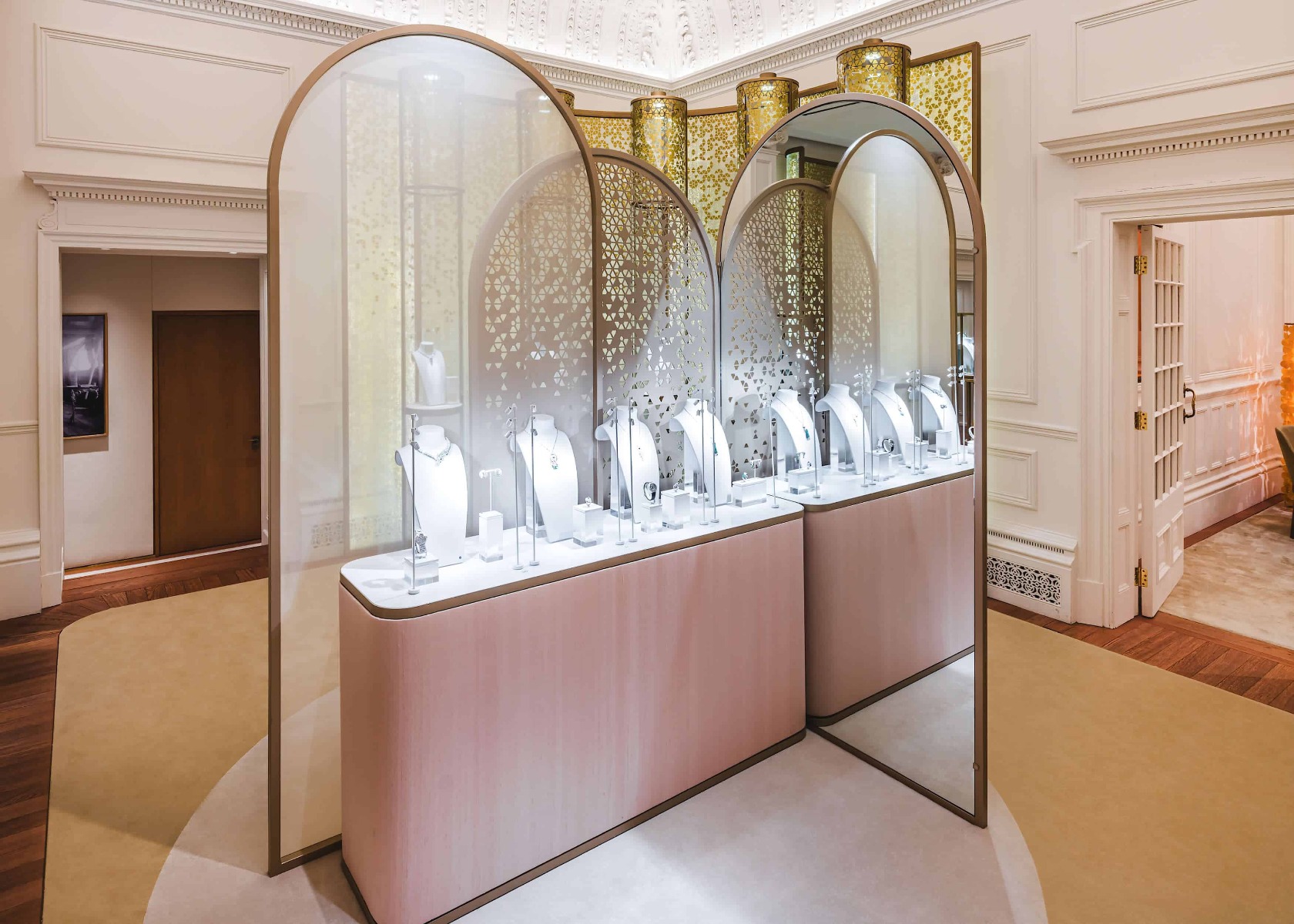
The floor combines warm - textured wooden materials and marble. Wooden floors are mainly used in the edge or transition areas. Their natural texture and warm color add a sense of intimacy to the space. Marble, on the other hand, is applied in the main display areas, such as the central aisle and key display zones. Its smooth surface and noble texture elevate the overall grade of the space.
The wall materials are diverse, including smooth latex - painted walls, textured decorative panels, and delicate wallpapers. Latex - painted walls are simple and clean, in line with the bright atmosphere of the overall space. Decorative panels are used to create specific display backgrounds or decorative areas, adding three - dimensionality and layers to the walls. Wallpapers are used in relatively private spaces like the negotiation room, and their beautiful patterns add an artistic touch to the space.
Materials for Display Props and Soft Furnishings
The materials chosen for display props are of high quality. The glass display cabinets use high - transparency glass, which can clearly showcase the details and luster of the jewelry. Paired with metal frames, they not only ensure the safety of the display but also add a sense of fashion and luxury. The wooden display platforms, after fine processing, present a smooth and soft texture, forming a contrast with the brilliance of the jewelry and highlighting its beauty.
In terms of soft furnishings, flower decorations use fresh or high - quality artificial flowers to bring vitality and a natural atmosphere to the space. The seats in the rest areas are made of soft leather or flannel, offering a comfortable touch and a pleasant resting experience for customers. The selection of these materials not only considers aesthetics but also fully takes into account practicality and comfort, reflecting the brand's emphasis on the customer experience.
Lighting Design: Interweaving Light and Shadow to Highlight Brilliance
Ambient Lighting
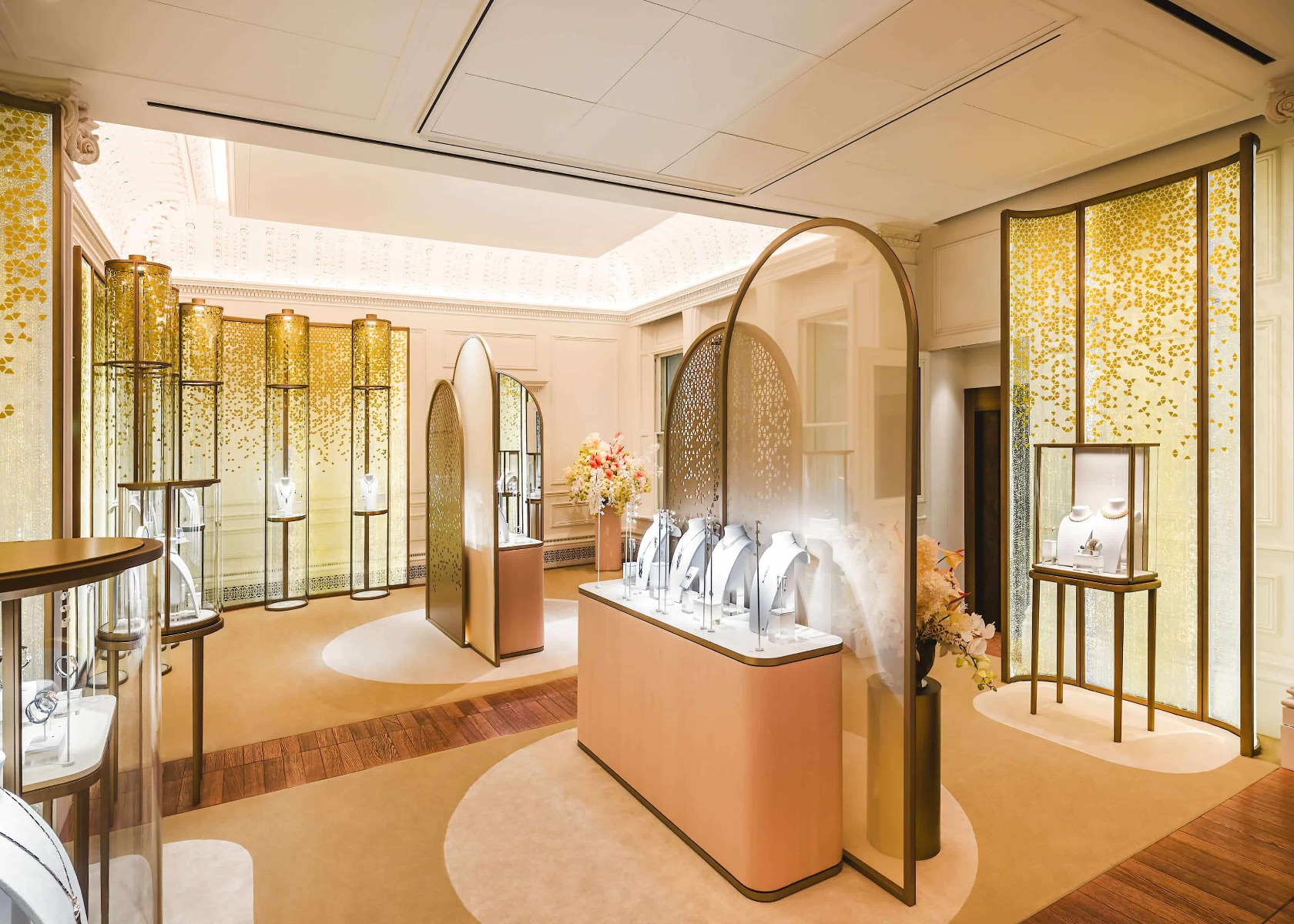
The ambient lighting in the store is mainly achieved through ceiling - mounted embedded lights and hidden light strips. The embedded lights provide uniform basic illumination, ensuring that the entire space is bright and free of blind spots, allowing customers to browse the jewelry comfortably. The hidden light strips are used to outline the contours of the space and decorative elements, such as the edges of the arches and the tops of the display cabinets. They enhance the three - dimensionality and layers of the space and create a warm and soft atmosphere.
Accent Lighting
The display cabinets are equipped with professional spotlights and LED light strips. Through precise adjustment of angles and intensities, they can perfectly highlight the luster, cut, and color of the jewelry. Different types of jewelry are illuminated in different ways. For example, diamonds and other dazzling jewelry are illuminated with multi - angle strong light to make them shine brightly. For pearls and other jewelry with a soft luster, soft light is used to emphasize their gentle texture.
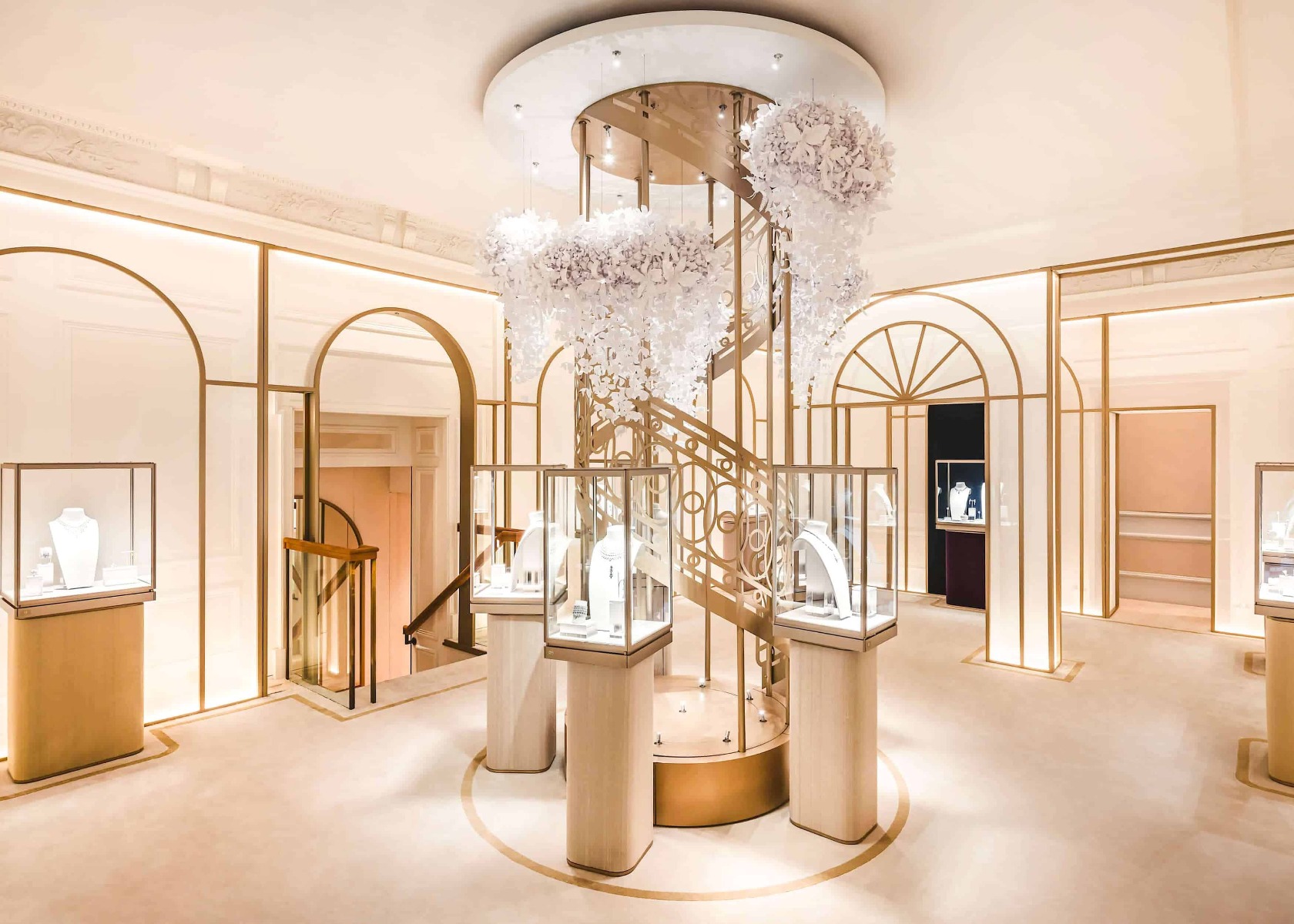
In addition, decorative lighting, such as the large chandelier in the center and the lights on the art installations, is also used in the store. These lights not only have a decorative function but also serve as visual focal points in the space, adding an artistic and luxurious atmosphere to the store.
Display and Exhibition: Artistic Presentation and Feature Emphasis
Display Methods and Layout
The display methods of jewelry are diverse, including individual display, combined display, and scene - based display. Individual display is usually used for high - end or unique jewelry pieces. Placed in separate display cabinets or on display platforms, they are set off by lighting and backgrounds to highlight their uniqueness and value. Combined display arranges different styles and types of jewelry together, such as necklaces with earrings and rings, providing customers with matching inspiration and showcasing the brand's rich product line.
The display layout follows aesthetic principles, emphasizing symmetry and balance while also incorporating appropriate variations and rhythms. For example, in long - shaped display areas, the jewelry display cabinets are arranged at regular intervals and in an orderly manner, creating a neat visual effect. In the central area or corners, however, unique display props or shapes are used to break the routine and attract customers' attention.
Display Props and Decorations
Display props are not only carriers for showcasing jewelry but also an important part of the store's design style. The design of display shelves and platforms is simple yet refined, in harmony with the overall spatial style. At the same time, some creative display props, such as display bases with the brand logo and uniquely - shaped jewelry holders, are used to increase the fun of the display and brand recognition.
Decorative elements also play an important role in the display. Decorations such as flowers, art paintings, and small sculptures complement the jewelry, creating an elegant artistic atmosphere. For example, placing a bouquet of flowers next to the display cabinet not only adds vitality and beauty but also sets off the brilliance and nobility of the jewelry.
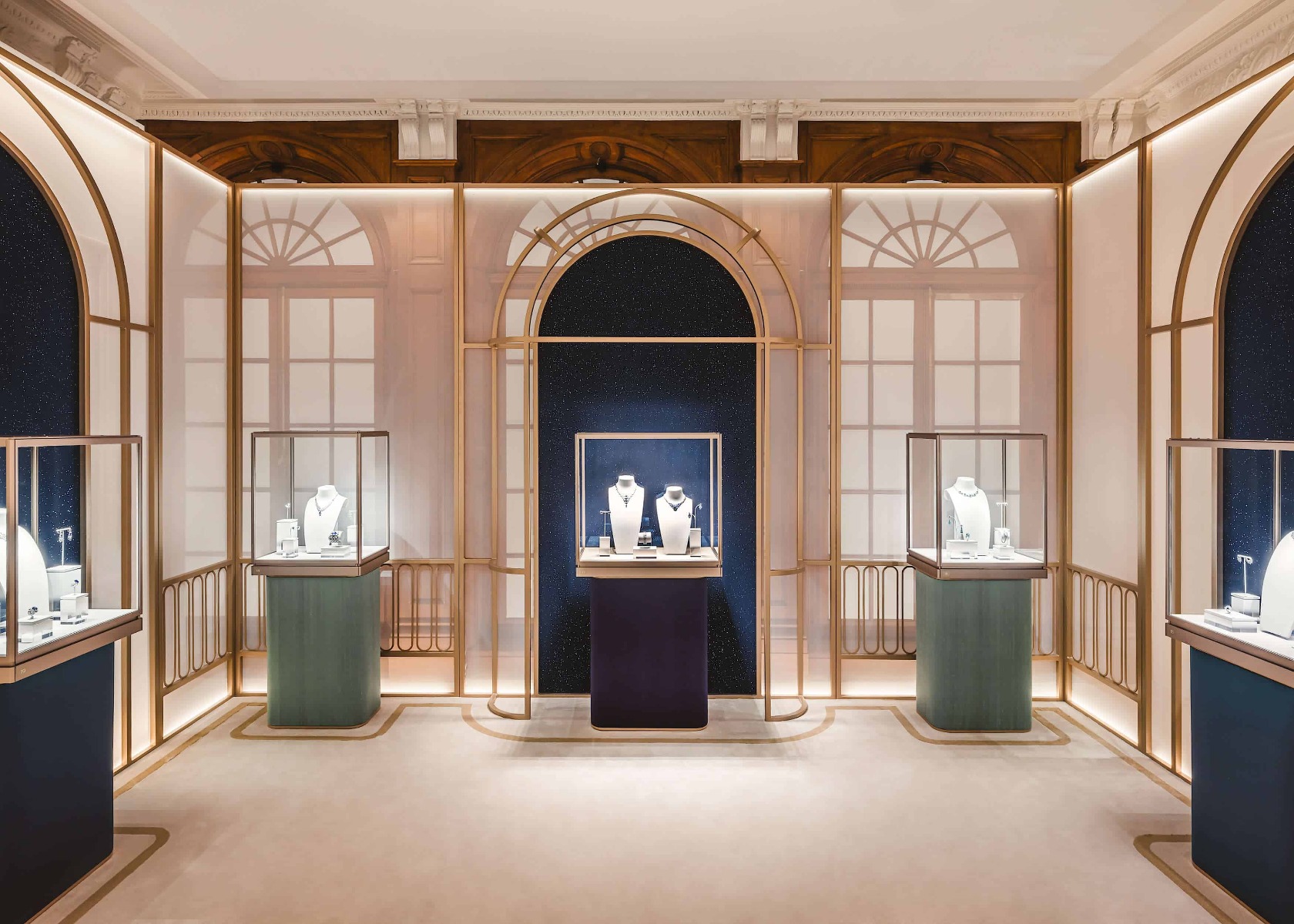
From the design details, one can sense the cultural connotations embodied in the store. The delicate patterns, elegant colors, and classical architectural elements all convey respect and inheritance of traditional aesthetics. Meanwhile, the application of modern materials and design techniques endows the space with a sense of fashion and innovation, reflecting the brand's balance and integration between tradition and modernity. The emotional value conveyed through the design not only enhances the customer's shopping experience but also helps to build long - term trust and loyalty between the brand and customers.