
check out over 200+


$4,500.00
Availability:
In stock
SKU
SRFD-1016
- High-End Quality
- Factory Direct Sale
- New Custom Design
- Easy Installation
Built-To-Order
Ships in approximately 5 business days; excludes artwork approval processing time of 2 business days
Complimentary Artwork Review
For a worry-free purchase, one of our artwork specialists will review your submission prior to printing to ensure crisp text and sharp imagery on your final product.
We chose fiberglass for this figurine for one simple reason: it keeps all those tiny details intact, without the worry of wear, fading, or damage over time. Every detail — the stitching, the fabric texture, the cap folds, the lace cutouts — was first modeled, then refined by hand. Even the posture and proportions draw from period paintings and photographs, so it feels like a real person standing there.
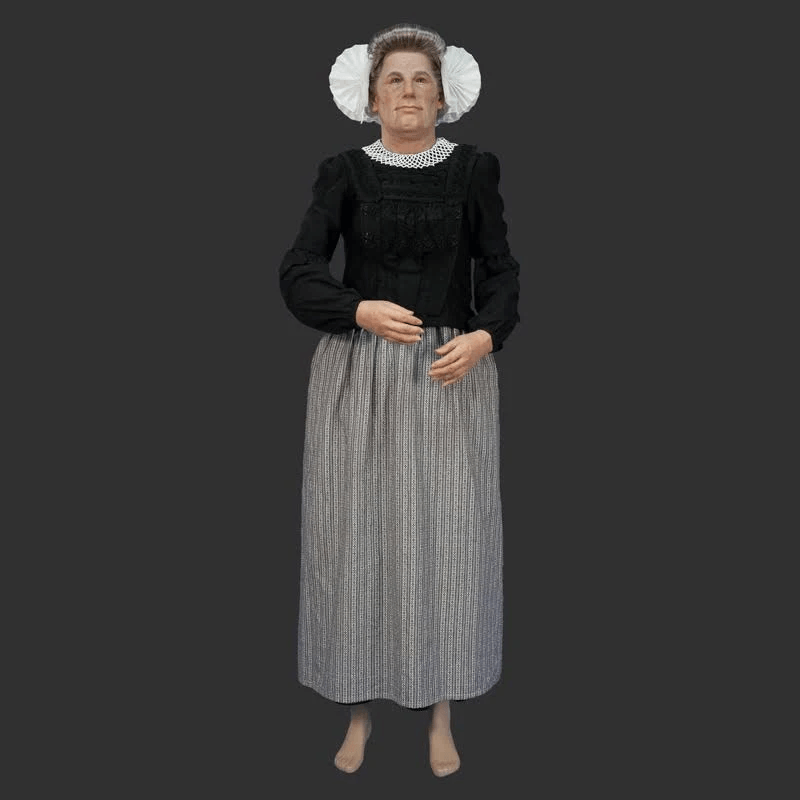
Durable Fiberglass Build
Fiberglass is tough. It resists knocks, moisture, and fading, so you don’t have to baby it. Whether it’s in a museum exhibit or a themed public space, it stays looking as it should, no constant upkeep required. We’ve designed it to show well from every angle. The back lacing, the way the apron hangs, the side cut — you can see the full construction from front, side, and back. Even if you’re new to Dutch folk costume, you’ll instantly get how these clothes worked and fit.
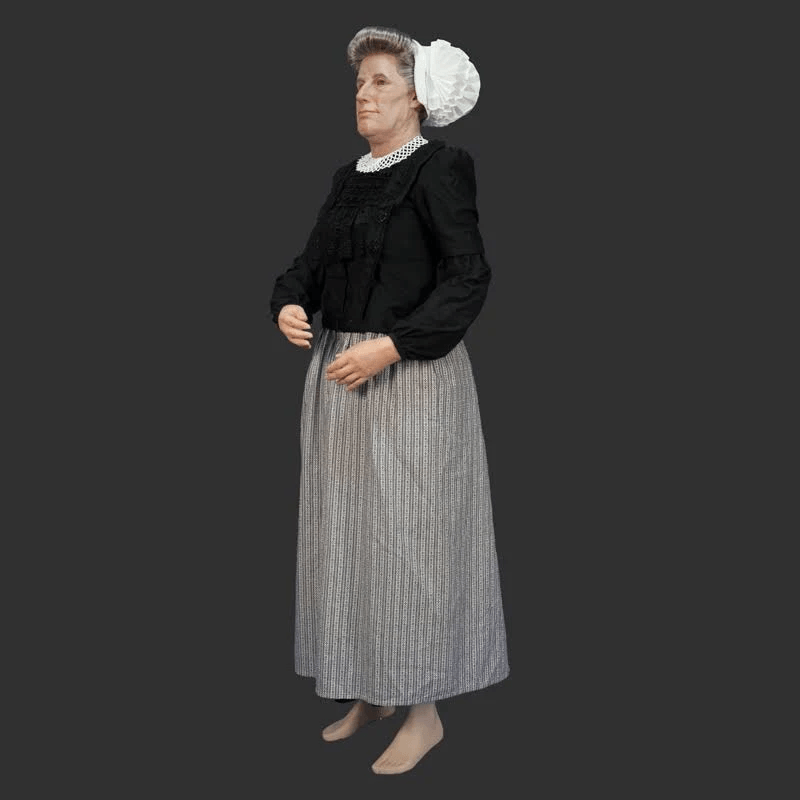
Cultural Exhibition Value
In a museum setting, it’s not just a model — it’s a way to show visitors exactly how women dressed back then. Why the fitted bodice? What do the apron stripes mean? How did the caps tie into local customs? All of that comes to life through the figurine.
In a tourism or themed space, it becomes a focal point. It gives the area character and makes it feel authentic. Visitors don’t just take photos of a figurine — they take photos with a little piece of Dutch culture.
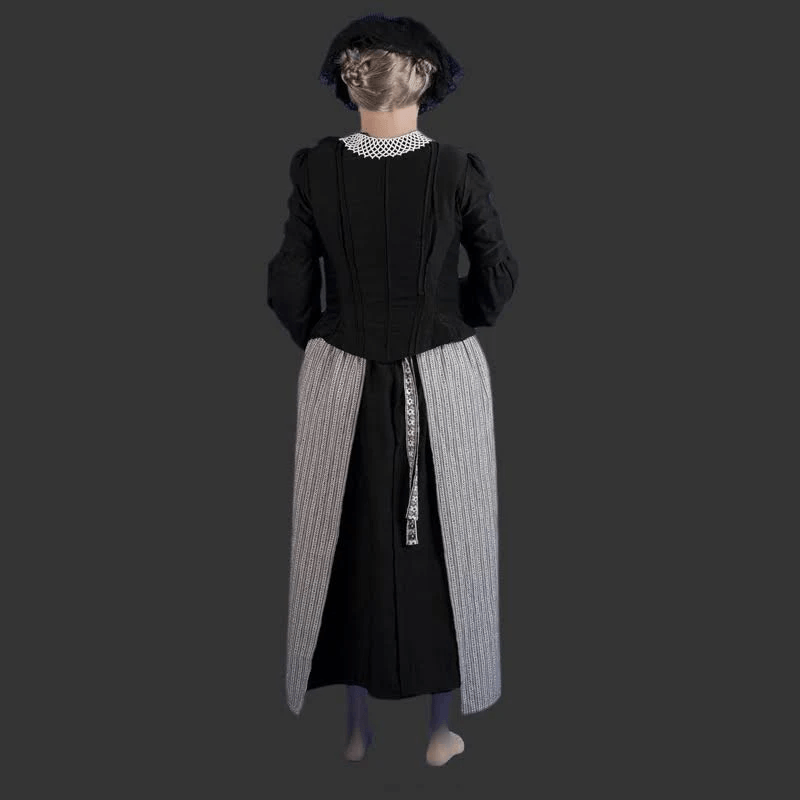
Convenient to See
For anyone studying folk dress or history, it’s a useful reference. You don’t have to sift through old books to see how the clothes were cut, layered, and worn. You can stand right in front of it and see it clearly, way more than drawings or photos ever could.